A wedding is an opportunity to dress well, but choosing the right outfit involves more than picking a good-looking suit. The venue, season, invitation, and level of formality all influence what you should wear. Some celebrations call for traditional tailoring, while others allow lighter fabrics, relaxed jackets, or cultural attire. The best choice is one that fits the occasion, feels comfortable throughout the day, and reflects your personal style without drawing attention away from the couple.
Understand the Wedding Dress Code
Before buying or assembling an outfit, read the invitation carefully. A black-tie celebration usually requires a tuxedo, while a formal wedding generally calls for a well-tailored suit, dress shirt, and polished shoes. Cocktail attire allows more flexibility with colors and accessories, whereas a casual wedding may suit a blazer and smart trousers.
If the invitation doesn’t specify a dress code, consider the venue and timing. A grand hotel reception typically calls for more formal clothing than a relaxed garden gathering. You can also ask the couple or wedding party if you’re unsure about the expected style.
Choose an Outfit That Suits Your Style
A Classic Suit for Formal Occasions
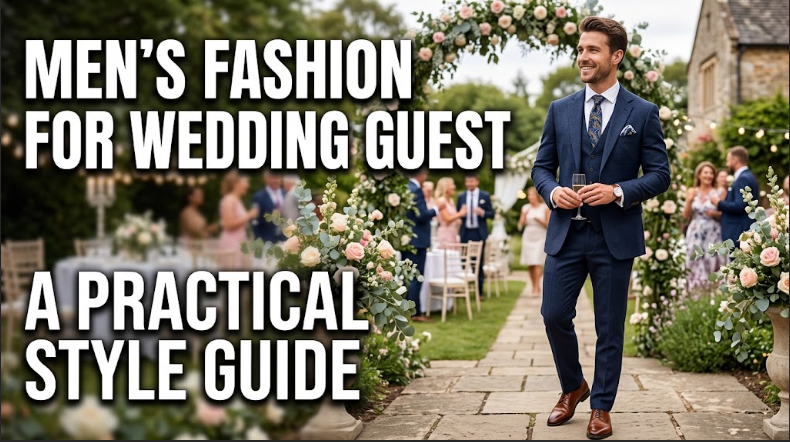
A two-piece suit is a dependable option for most traditional weddings. Navy, charcoal, and medium grey are versatile colors that work with different shirts and accessories. Pair your suit with a well-fitted white shirt and leather dress shoes for a clean, balanced appearance. Fit matters more than complicated styling. The jacket should sit comfortably at the shoulders, the sleeves should reveal a little shirt cuff, and the trousers should fall neatly over your shoes. Small adjustments from a tailor can make an affordable suit look considerably better.
A Relaxed Look for Outdoor Celebrations
Outdoor weddings often allow a softer approach to formal dressing. A lightweight blazer with tailored trousers creates a polished outfit without the structure of a complete suit. Beige, olive, light grey, and muted blue are useful colors for garden ceremonies and daytime receptions. Choose breathable materials if you’ll spend several hours outdoors. Loafers can work well for a relaxed event, although the terrain matters; soft grass and uneven paths may make some shoes impractical. Keep your shirt and trousers neatly pressed, even if the overall look is informal.
Contemporary Style With Separate Pieces
You don’t always need a matching jacket and trousers to create a well-dressed appearance. Combining separate pieces gives you more room to experiment with texture and color while keeping the outfit appropriate. For example, a dark blazer, cream trousers, and a pale blue shirt can create an attractive combination for a semi-formal celebration. The key is to make the pieces look intentional rather than mismatched. Keep the color palette limited and ensure that the trousers and jacket have a similar level of formality. Avoid pairing a highly structured formal jacket with overly casual denim unless the wedding specifically allows it.
Match Your Clothing to the Season
Dressing for Warm Weather
Summer ceremonies can be uncomfortable in heavy, restrictive clothing, particularly when they involve outdoor photographs or long periods of standing. Linen, lightweight cotton, and tropical-weight wool are useful options because they offer different levels of breathability and structure. Light grey, tan, and muted blue can also create a fresh appearance in daylight. Linen has a naturally relaxed texture, but it wrinkles more readily than many other suit fabrics. If you want a sharper finish, consider a linen blend or lightweight wool. Choose an undershirt that doesn’t show through your dress shirt, and make sure your footwear is suitable for the location.
Dressing for Cold Weather
For autumn and winter weddings, wool suits and richer colors can create a more seasonal appearance. Deep green, burgundy, brown, navy, and charcoal work well with simple shirts and leather shoes. A tailored overcoat provides warmth when travelling between venues or attending an outdoor ceremony. Layers should complement the suit rather than compete with it. A coordinated coat and a suitable scarf may be enough for colder conditions, depending on the location. If the invitation specifies black tie, make sure your outerwear doesn’t replace the formal requirements of the event.
Get the Colors and Accessories Right
Color coordination can make an outfit look considered without requiring expensive clothing. A neutral suit provides a useful base, while a tie, pocket square, or shirt introduces a small amount of contrast. You don’t need every accessory to match exactly; complementary shades and similar levels of formality usually create a more natural result. White and ivory clothing deserve extra consideration because they may be associated with bridal attire in some weddings. A white dress shirt beneath a suit is a conventional choice, but an all-white outfit may not suit every celebration. Follow any color guidance from the couple, especially when the wedding has a particular theme or cultural tradition. Accessories should serve a purpose. A simple watch, leather belt, and understated pocket square can finish an outfit without making it look crowded. If your suit already features a noticeable pattern or texture, keep the remaining details restrained.
Select Shoes You Can Wear Comfortably
Footwear affects both the appearance and practicality of your outfit. Oxford shoes are suitable for many formal occasions, while Derby shoes offer a slightly more flexible option for business-style and semi-formal clothing. Leather loafers can work for daytime weddings and less formal receptions, provided they suit the invitation. Comfort deserves attention if the celebration includes a long ceremony, a standing reception, or dancing. Wear shoes that fit properly rather than introducing a new pair on the wedding day. Check the weather and venue, too, because delicate suede and smooth leather may not be the best choices for wet outdoor conditions.
Consider Traditional and Cultural Clothing
Western suits aren’t the only appropriate option for wedding guests. In South Asian celebrations, a kurta pajama with a waistcoat, a sherwani, or another traditional outfit may be more suitable than a conventional suit. The right choice depends on the family’s customs, the specific ceremony, and the requested level of formality. Color and embellishment can vary widely across cultural traditions. Some events welcome elaborate fabrics and festive shades, while others call for more understated clothing. If you’re unfamiliar with the customs, ask someone attending the wedding rather than assuming that one style is appropriate for every ceremony.
Mistakes That Can Spoil a Wedding Outfit
Poor fit is one of the easiest problems to overlook. A jacket that pulls across the chest or trousers that bunch around the ankles can make even expensive clothing look untidy. Try on the complete outfit in advance and allow enough time for alterations. Another mistake is treating every wedding as equally formal. Sneakers, distressed jeans, and graphic shirts may be fine for certain relaxed celebrations but are rarely suitable for formal ceremonies. The opposite can also happen: a tuxedo may feel out of place at a casual daytime gathering. Finally, avoid dressing to compete with the wedding party. A guest can express personal style through color, fabric, and accessories without copying the groom’s distinctive look. Respecting the event’s expectations is part of being a thoughtful guest.
Conclusion
A good wedding outfit should feel appropriate from the ceremony through the final part of the reception. Start with the invitation, choose clothing that suits the setting, and pay attention to fit and comfort before worrying about smaller styling details. You can create a strong look with pieces you already own, particularly if you have a versatile suit, a clean dress shirt, and suitable shoes. A few thoughtful adjustments may be all you need. Before leaving for the event, check your clothing in natural light, make sure your shoes are clean, and prepare for the weather. Arriving well dressed and comfortable allows you to focus on celebrating with the couple rather than worrying about your outfit.