Regency-era men’s fashion combined sharp tailoring, carefully chosen fabrics, and a strong sense of personal presentation. A gentleman’s appearance depended on more than an expensive coat; the fit of his clothing, the arrangement of his neckcloth, and the condition of his shoes all contributed to the final look. The style remains recognizable for its elegant silhouette and understated approach to formal dressing. The Regency period in Britain is generally associated with 1811 to 1820, although its fashion influences extend beyond those years. Men dressed differently for social visits, country activities, business, and formal evenings. Understanding these differences helps explain why Regency clothing was more varied than the familiar tailcoat and waistcoat combination suggests.
What Made Regency Men’s Fashion Distinctive?
The defining feature of Regency menswear was its emphasis on shape and proportion. Coats were fitted through the body, waistcoats added contrast, and trousers or breeches completed a carefully balanced silhouette. Compared with the heavily decorated men’s clothing of earlier decades, fashionable dress increasingly favored clean lines and restrained details. Personal grooming was equally important. A neatly tied cravat, clean shirt, polished footwear, and well-maintained coat could make a stronger impression than excessive ornament. This approach helped establish a style in which precision and good taste mattered as much as the garments themselves.
Essential Clothing Worn by Regency Gentlemen
Tailcoats and Fitted Jackets
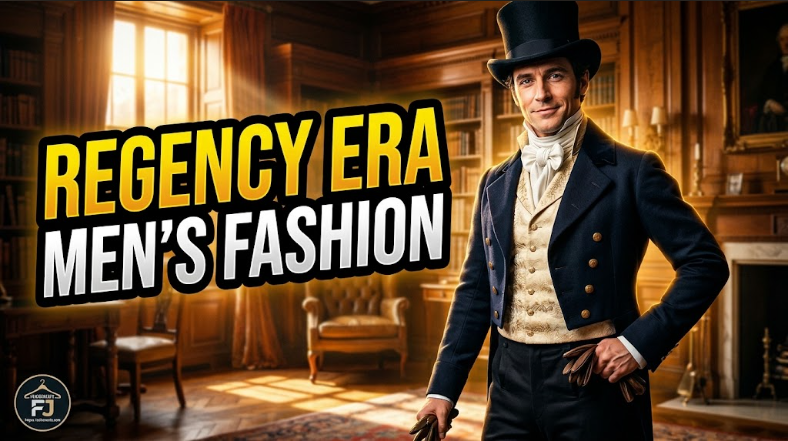
Tailcoats were among the most recognizable garments of the period. Their shaped fronts and extended back tails created a distinctive profile, while raised collars and structured shoulders gave the wearer a formal appearance. Dark blue, black, brown, and green were common choices, although color depended on the garment and occasion. Coats were not interchangeable across every setting. A gentleman attending an evening gathering would generally choose different clothing from someone preparing for horseback riding or traveling through the countryside. The cut, fabric, and level of decoration helped determine whether a coat was suitable for a particular activity.
Waistcoats and Their Decorative Details
The waistcoat provided an opportunity to introduce color and texture beneath a relatively restrained coat. Some featured subtle woven patterns, while others used contrasting fabrics or decorative embroidery. Light-colored waistcoats could brighten an outfit, whereas darker versions created a more coordinated appearance. Fit was central to their appeal. A waistcoat needed to sit neatly over the shirt without disrupting the line of the coat. Its neckline, buttons, and visible front panel also influenced the overall appearance of the outfit.
Shirts and Neckwear
White shirts formed the foundation of many fashionable Regency outfits. Linen was particularly valued, and high collars helped frame the face while providing a base for neckwear. The shirt was often only partly visible, but its cleanliness and presentation remained essential to the finished look. Cravats were a defining feature of men’s style during this period. These cloth neckpieces could be folded and tied in different ways, from relatively simple arrangements to elaborate knots. Their appearance reflected personal taste, and mastering a neat tie was an important part of dressing well.
Breeches, Pantaloons, and Long Trousers
Men’s lower garments varied according to fashion and occasion. Knee-length breeches remained suitable for certain formal settings, while fitted pantaloons offered a longer, close-fitting alternative. Long trousers gained popularity during the early nineteenth century and became an increasingly familiar choice for everyday wear. These garments changed the proportions of an outfit. Breeches were commonly paired with stockings, while pantaloons and trousers extended farther down the leg and worked with different types of footwear. Choosing the right style is therefore important when recreating a specific Regency look.
Footwear and Accessories That Completed the Outfit
Shoes and boots were chosen according to where a gentleman expected to go. Polished leather shoes suited many formal occasions, while tall riding boots were practical for country activities. Their condition mattered because worn or poorly maintained footwear could undermine an otherwise carefully assembled outfit. Accessories added practical value as well as visual interest. Top hats were common outdoor headwear, pocket watches helped men keep time, and gloves were appropriate for various social occasions. Walking sticks and watch chains could also form part of a gentleman’s appearance, although not every man wore every accessory.
How Social Life Influenced Regency Fashion
Clothing communicated more than personal preference in Regency Britain. It helped signal social position, occupation, wealth, and familiarity with accepted standards of dress. A gentleman’s outfit for a formal gathering differed from what he might wear while traveling or spending time outdoors. The expectations surrounding dress also made versatility important. Wealthier men could maintain separate garments for different activities, while those with more limited means had to make their wardrobes serve several purposes. Fabric quality, tailoring, and garment maintenance all affected how an outfit appeared.
Beau Brummell and the Preference for Simplicity
Beau Brummell became a celebrated figure in Regency fashion because of his commitment to immaculate grooming and precise dressing. Rather than relying on elaborate decoration, his style emphasized clean linen, well-cut coats, carefully arranged cravats, and polished boots. His reputation helped popularize the idea that elegance came from restraint and attention to detail. His influence should not be mistaken for a complete picture of how every man dressed. Fashion varied across social classes, occupations, and regions, and many men followed practical needs rather than elite trends. Brummell’s significance lies in how strongly he came to represent a particular ideal of masculine presentation.
How to Create a Regency-Inspired Outfit Today
A modern Regency-inspired outfit works best when its main pieces follow a consistent style. Begin with a fitted tailcoat and a contrasting waistcoat, then add a white shirt and a broad neckcloth. Fitted pantaloons or historically styled breeches will create a more period-appropriate silhouette than ordinary modern suit trousers. Keep accessories purposeful rather than excessive. Polished shoes suit a formal interpretation, while tall boots work better for a country-inspired outfit. If historical accuracy matters, pay attention to the shape of the coat and the height of the waistline, since these details often distinguish Regency clothing from later nineteenth-century styles.
Conclusion
Regency menswear offers a useful example of how clothing can communicate identity through shape, condition, and carefully chosen details. Its lasting appeal comes from the balance between formal structure and understated decoration, rather than from any single garment. For anyone interested in historical clothing, the most effective starting point is to understand the occasion for which an outfit was designed. Formal evening dress, daytime clothing, and riding attire each had their own requirements, and combining them without consideration can produce an inaccurate result. A well-planned Regency-inspired outfit does not need excessive ornament to feel convincing. Attention to tailoring, neckwear, footwear, and proportion will usually do more to capture the period’s character.