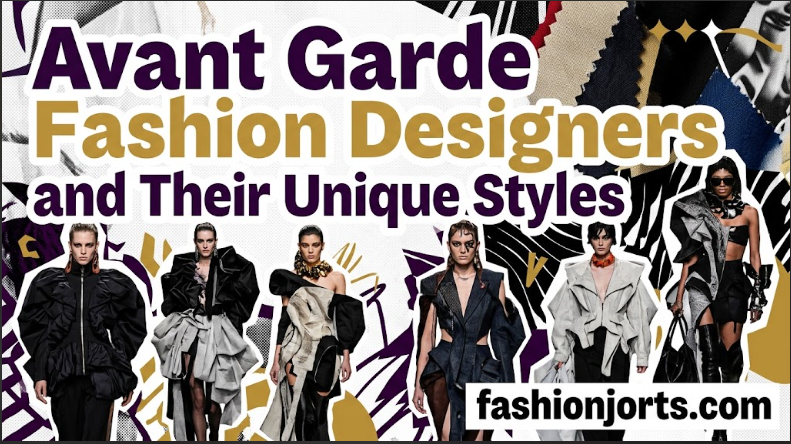
Fashion becomes interesting when designers stop following familiar rules and begin asking what clothing can become. Avant-garde fashion is built around this curiosity, using unexpected shapes, unusual materials, and unconventional construction to create something beyond ordinary dress. Some designers make garments that resemble sculptures, while others transform simple jackets, trousers, and dresses through proportion and structure. Their work offers a different way to understand fashion, where creativity matters as much as appearance.
What Is Avant-Garde Fashion?
Avant-garde fashion is an experimental approach to clothing that challenges established ideas about design, beauty, and wearability. Instead of relying on familiar cuts and seasonal trends, designers explore unusual silhouettes, layered fabrics, asymmetry, and unexpected combinations of materials. Not every avant-garde outfit needs to be dramatic or difficult to wear. A sharply oversized coat, an irregularly cut shirt, or a minimalist outfit with unconventional proportions can communicate the same creative attitude. What matters is the intention behind the design and its willingness to move beyond familiar expectations.
Avant-Garde Fashion Designers Worth Knowing
Rei Kawakubo
Rei Kawakubo is known for designs that question conventional ideas of beauty and the relationship between clothing and the human body. Through Comme des Garçons, she has explored irregular shapes, unusual volumes, and garments that resist traditional ideas of flattering fit. Her approach encourages people to consider clothing as an independent form of expression rather than something designed only to enhance the body’s natural shape. Kawakubo’s work is especially interesting for readers who appreciate conceptual fashion and unconventional silhouettes.
Alexander McQueen
Alexander McQueen brought dramatic storytelling and exceptional tailoring together in collections that often explored difficult historical and emotional subjects. His designs could be sharply structured, romantic, disturbing, or theatrical, sometimes combining several qualities within a single collection. What distinguished his work was the connection between the garments and the ideas behind them. Rather than presenting clothing as decoration alone, McQueen used fashion shows to create visual narratives that invited audiences to think about history, identity, and human experience.
Yohji Yamamoto
Yohji Yamamoto approaches experimental fashion through shape, movement, and restraint. His designs often feature flowing fabrics, oversized cuts, layered garments, and predominantly dark colors that shift attention toward construction and proportion. His work offers an alternative to clothing that depends on a close fit or elaborate embellishment. Loose tailoring can create a strong silhouette while allowing the wearer freedom of movement, making his design philosophy relevant to both high fashion and contemporary everyday dressing.
Issey Miyake
Issey Miyake explored how clothing could move with the body while taking advantage of new approaches to fabric and construction. His work is closely associated with pleating, lightweight materials, and garments that combine practical use with distinctive visual effects. The appeal of his designs lies in their relationship with movement. A garment can change its appearance as someone walks, sits, or stretches, showing how material and construction can influence the experience of wearing clothes.
Martin Margiela
Martin Margiela challenged conventional fashion through deconstruction, reconstruction, and an interest in the details usually hidden inside garments. His designs have included exposed seams, altered clothing elements, and unexpected treatments of familiar materials. This approach changes how people look at finished clothing. A seam can become a visual feature, an old garment can become the starting point for something new, and an unfinished appearance can be a deliberate design decision rather than a manufacturing mistake.
Iris van Herpen
Iris van Herpen explores the possibilities of combining fashion with science, technology, and natural forms. Her sculptural creations often feature flowing structures and complex shapes that extend beyond conventional fabric cutting and sewing. Her work is particularly relevant to the future of couture because it demonstrates how digital design and advanced fabrication can support artistic experimentation. At the same time, the garments retain a close relationship with movement, the human body, and traditional craftsmanship.
Rick Owens
Rick Owens has developed a distinctive style through exaggerated proportions, layered clothing, unusual footwear, and architectural silhouettes. His designs often use muted colors and contrasting textures to create visual impact without relying on elaborate prints. His influence extends into contemporary streetwear, where oversized jackets, long tops, wide trousers, and sculptural sneakers have become recognizable styling choices. Owens shows how an experimental aesthetic can be adapted into a personal wardrobe while retaining a strong visual identity.
What Sets Avant-Garde Designers Apart?
The main difference is their willingness to question familiar design decisions. A conventional garment often aims to fit established expectations of shape, comfort, and appearance, whereas an avant-garde design may deliberately change one or more of those expectations. Some designers focus on the structure of a garment, while others experiment with materials, technology, or the ideas communicated through a collection. These approaches are not interchangeable, and that variety is part of what makes the field interesting. A garment by Kawakubo may challenge the body’s outline, while one by Miyake may focus on how fabric responds to movement.
How to Incorporate Avant-Garde Fashion Into Your Wardrobe
You can experiment with this style without buying expensive designer pieces or wearing dramatic runway clothing. Begin with one garment that has an unusual cut, an oversized shape, an asymmetrical hem, or an interesting texture, then combine it with simpler pieces. Proportion is a useful place to start. Wide-leg trousers can work with a structured top, while an oversized jacket may look balanced with a more fitted base layer. Neutral colors can help different shapes work together, although a carefully chosen bright color can also become the focus of an outfit. Pay attention to comfort as well as appearance. Experimental clothing should suit the way you move and the occasions for which you dress, even if its design challenges traditional expectations. The aim is to develop a personal style rather than reproduce an entire runway look.
Why Avant-Garde Fashion Still Matters
Avant-garde designers create space for ideas that might not fit easily into mainstream collections. Their experiments can influence tailoring, fabric development, streetwear, and the ways other designers approach presentation and garment construction. Their work also encourages a more thoughtful relationship with clothing. Looking closely at how a garment is cut, assembled, or transformed can reveal creative decisions that are easy to overlook when fashion is viewed only through trends and shopping.
Conclusion
Avant-garde fashion offers a reminder that clothing does not have to follow a fixed set of rules. The designers associated with this approach have expanded the possibilities of shape, material, and construction, each through a different creative perspective. For readers interested in developing their own style, the most useful starting point is to observe how these designers make decisions about proportion, texture, and form. Experiment with one unfamiliar element, see how it works with the clothes you already own, and build a wardrobe that reflects your own ideas rather than simply following the latest trend.