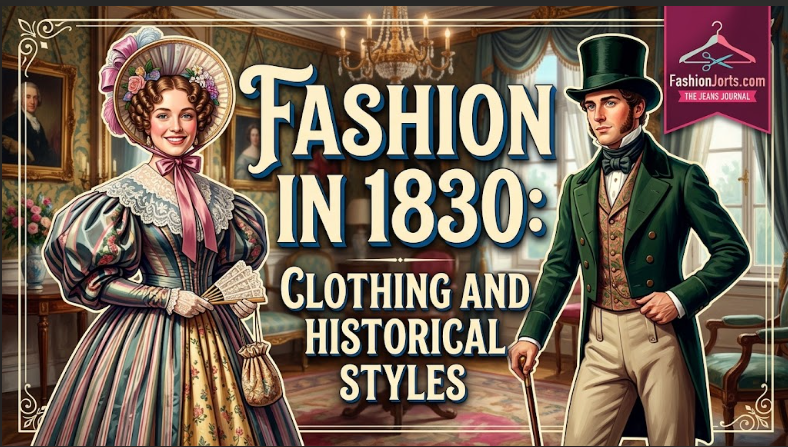
Fashion in 1830 looked very different from the simple, high-waisted clothing popular at the beginning of the nineteenth century. Women’s dresses had developed fuller skirts, tightly fitted bodices, and oversized sleeves, while men’s outfits featured structured coats, waistcoats, and neatly tailored trousers. Clothing was more than a practical necessity; it communicated social position, personal taste, and expectations about how men and women should appear in public. The year 1830 marked an important moment in the Romantic period of fashion. Designers and dressmakers experimented with dramatic proportions, decorative fabrics, and carefully shaped garments. These styles created a distinctive appearance that would gradually change during the following decade.
What Made Fashion in 1830 Different?
The most noticeable change was the emphasis on volume and proportion. Women’s clothing drew attention to the shoulders and skirts while keeping the waist narrow, creating a balanced but exaggerated silhouette. Men’s clothing followed a similar principle through fitted jackets, broad shoulders, and coats that widened below the waist. Fashion also reflected the influence of European art and literature during the Romantic movement. Historical inspiration, decorative details, and expressive shapes became increasingly visible in fashionable dress. However, the latest styles were not available to everyone, and ordinary clothing often depended on household budgets, occupation, and access to materials.
Women’s Dresses and Everyday Clothing
Women’s fashion in 1830 combined elaborate shapes with practical differences between daytime and evening clothing. A typical fashionable dress had a fitted upper section and a skirt that spread outward from the waist. The final appearance depended on the fabric, the construction of the bodice, and the layers worn underneath.
Large Sleeves and Narrow Waists
Oversized sleeves were among the most recognizable features of early 1830s fashion. Known as gigot or leg-of-mutton sleeves, they were particularly full around the shoulders and upper arms before narrowing toward the wrists. This shape made the upper body appear wider and emphasized the narrow waist. Maintaining the sleeves’ volume could require careful gathering, padding, or internal supports. The result was a dramatic outline that distinguished the period from earlier fashions with slimmer sleeves. These exaggerated proportions were especially fashionable during the early part of the decade.
Skirts, Petticoats, and Bodices
Bodices were shaped to fit closely around the torso, often using seams and corsetry to define the waist. Skirts were fuller than those associated with the earlier Empire style, and petticoats helped create their rounded appearance. Although the skirts looked substantial, they did not generally depend on the large metal cage structures that became associated with later Victorian fashion. Dressmakers paid close attention to the relationship between the bodice and skirt. A well-constructed garment needed to maintain its shape while allowing the wearer to move comfortably enough for ordinary activities. The quality of the cut and sewing was just as important as the fabric itself.
Daywear Compared With Evening Dresses
Day dresses usually had higher necklines and long sleeves, making them suitable for visits, walks, and other daytime activities. Evening gowns could reveal more of the shoulders, use shorter sleeves, and feature finer materials or additional decoration. The choice of dress depended on the occasion and the wearer’s social circumstances. Printed cottons offered attractive options for everyday clothing, while silk was often used for more expensive garments. Ribbons, embroidery, and contrasting trims could add interest without changing the overall silhouette. Fashionable clothing was therefore defined by both its construction and its decorative details.
Men’s Fashion and Formal Dress
Men’s clothing in 1830 favored a structured appearance, with tailored coats, waistcoats, and trousers forming the basis of many outfits. The fashionable figure emphasized the shoulders and chest while keeping the waist relatively defined. Although men’s garments often used darker colors, the cut and fit could make an outfit equally distinctive.
Coats, Waistcoats, and Trousers
Frock coats were common choices for daytime wear, while tailcoats remained important for formal occasions. These garments were generally shaped through the torso, with their lower sections extending outward or backward. Wool was a practical material for coats because it provided warmth and helped garments retain their form. Waistcoats added another layer and could introduce contrasting colors or patterns. Men typically wore them with shirts featuring high collars and carefully tied neckcloths. Long trousers were well established, although fitted pantaloons remained relevant for certain formal and fashionable settings.
Hats and Finishing Details
A top hat could complete a man’s public outfit, particularly in urban environments. Gloves, pocket watches, walking sticks, and cravats were also associated with fashionable dress. These accessories were not simply decorative; they helped distinguish different occasions and forms of social presentation. Personal grooming and the quality of tailoring mattered as much as the individual items. Men who followed fashionable dress often paid attention to the coordination of their coats, waistcoats, neckwear, and hats. The result was a polished appearance built around fit rather than excessive ornament.
Fabrics, Colors, and Decorative Patterns
The materials available to people in 1830 varied according to income, location, and purpose. Cotton was useful for everyday garments, wool suited coats and warmer clothing, and silk was associated with more expensive dress. Lightweight textiles such as muslin were also used for particular styles of women’s clothing. Floral prints and other patterned fabrics added variety to the period’s wardrobe. Some dresses relied on colorful designs, while others used relatively plain material to highlight their shape and construction. Decorative borders, embroidery, and ribbons could further distinguish a garment. The amount spent on clothing influenced its appearance and longevity. Wealthier households could afford finer materials and specialized tailoring, whereas people with limited means often repaired, altered, or reused garments. Fashion therefore included both expensive formal dress and practical clothing adapted to everyday life.
Hairstyles, Bonnets, and Accessories
Women’s hairstyles often featured curls arranged around the face, with braids or gathered sections at the back. Hair ornaments, combs, ribbons, and flowers could be added for special occasions. These arrangements complemented the broad shoulders and decorative sleeves of fashionable dresses. Bonnets were important for outdoor wear. Their brims and ribbons framed the face and helped complete an outfit, while shawls and gloves offered both practical protection and visual interest. Jewelry varied according to personal means and the occasion, ranging from modest pieces to more elaborate ornaments. Men’s accessories followed a different approach, with hats, watches, gloves, and neckwear helping complete an outfit. The choices people made reflected the settings in which they expected to appear. Clothing and accessories worked together to communicate the level of formality required for a particular event.
How Clothing Changed During the 1830s
The dramatic styles of 1830 did not remain unchanged throughout the decade. By the middle and later 1830s, extremely full sleeves gradually lost their prominence, and the overall silhouette became more restrained. Shoulders, waistlines, and skirt proportions continued to change as dressmakers adapted to new preferences. The year 1837 is often used as the beginning of the Victorian era because Queen Victoria became monarch of Britain that year. However, fashion did not change immediately with her accession. The styles worn in 1830 belong more accurately to the Romantic period, and many of their features continued to evolve after the Victorian era began. Understanding this gradual change is useful when studying historical clothing. A dress from 1830 may look noticeably different from one made near the end of the decade, even though both are described as 1830s fashion. Dates, surviving garments, and period illustrations help distinguish these changing styles.
Conclusion
Fashion in 1830 stands out for its dramatic shapes and attention to the proportions of the human body. Women’s gowns emphasized full skirts and oversized sleeves, while men’s outfits relied on carefully tailored coats, waistcoats, and accessories. Both styles reflected the period’s interest in formal presentation and distinctive silhouettes. The clothing also reveals differences in wealth, occupation, and access to materials. A fashionable silk gown and a practical cotton dress could belong to the same period while serving very different needs. For anyone studying or recreating historical dress, the most useful approach is to focus on the specific year, garment construction, and intended occasion. These details provide a more accurate picture of how people dressed in 1830 than relying on a general image of nineteenth-century fashion.