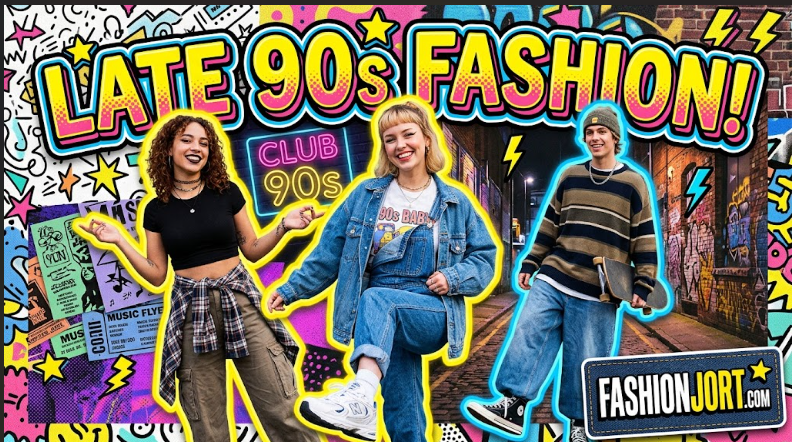
The late 90s created one of the most recognizable fashion eras of recent history. Between 1997 and 1999, clothing moved away from the heavy grunge influence of the early decade and developed a more balanced identity built around simplicity, comfort, and personal expression. People mixed elegant pieces with casual basics, creating outfits that felt relaxed but still carefully styled. This period introduced many looks that continue to influence fashion today. From slip dresses and straight-leg denim to oversized streetwear and minimalist outfits, late 90s style was about combining different influences rather than following one strict trend. It was the final chapter of 90s fashion before the arrival of early 2000s Y2K trends.
What Defined Late 90s Fashion?
Late 90s fashion was shaped by contrast. Some people preferred clean and minimal outfits, while others embraced oversized clothing inspired by music and street culture. Unlike previous decades that often had one dominant look, the late 90s allowed different styles to exist together. The era focused on clothing that felt natural and wearable. Simple colors, comfortable fabrics, and practical designs became popular. A person could wear a basic tank top with jeans during the day and transform the same wardrobe with a jacket or accessories for an evening look. The rise of music videos, television shows, and celebrity culture also changed how people discovered fashion. Style inspiration was no longer limited to magazines or fashion runways; it came from everywhere.
Minimalism Became the New Fashion Statement
One of the strongest movements of the late 90s was minimalism. Fashion became cleaner, with fewer patterns and less decoration. Instead of trying to create dramatic outfits, many people focused on quality basics that looked effortless. Black dresses, fitted tops, simple sweaters, and tailored jackets became wardrobe essentials. Neutral colors such as black, white, beige, and gray dominated many popular outfits. The minimalist approach created a sophisticated appearance without looking overly formal. It showed that a simple outfit could still make a strong impression.
Slip Dresses Changed Women’s Fashion
The slip dress became one of the most memorable pieces of late 90s fashion. With thin straps, smooth fabrics, and a simple shape, it represented the decade’s preference for understated elegance. Unlike traditional evening dresses, slip dresses could be styled in different ways. Many people wore them with cardigans, denim jackets, boots, or casual sandals, creating a mix of feminine and relaxed fashion. The popularity of this style showed a major change in women’s clothing. Fashion was becoming less about looking perfectly dressed and more about appearing confident and comfortable.
Denim Remained an Everyday Essential
Denim was a major part of late 90s wardrobes. Jeans were practical, affordable, and easy to style, making them a favorite choice for people of all ages. Straight-leg jeans, bootcut styles, relaxed fits, and denim jackets became common during this period. Denim skirts and overalls also appeared frequently in casual outfits. The popularity of denim showed the casual nature of the era. People wanted clothes that worked for everyday life while still reflecting their personality.
Streetwear and Music Influenced Everyday Style
Late 90s streetwear brought a different energy to fashion. Hip-hop, skate culture, and sportswear influenced how young people dressed, making oversized clothing and sneakers more common. Baggy jeans, graphic T-shirts, hoodies, sports jackets, and baseball caps became popular choices. These styles represented confidence and individuality rather than traditional ideas of dressing up. Music artists played a major role in spreading these trends. Performers became fashion influences, and fans often copied the clothing styles they saw in music videos and performances.
Women’s Late 90s Fashion Trends
Women’s fashion during the late 90s combined simple elegance with playful details. Outfits often included fitted tops, mini skirts, jeans, cardigans, and casual dresses. Accessories helped complete the look. Choker necklaces, small handbags, hair clips, and tiny sunglasses became recognizable parts of the era’s style. Teen fashion was also strongly influenced by movies and television. Popular characters introduced new outfit ideas that quickly became trends among young audiences.
Men’s Late 90s Fashion Trends
Men’s fashion in the late 90s focused heavily on comfort and casual style. Loose jeans, oversized shirts, sneakers, and sports-inspired clothing were common choices. Skate culture encouraged relaxed fits, while hip-hop influenced larger silhouettes and statement pieces. At the same time, some men preferred a cleaner style with polo shirts, leather jackets, sweaters, and simple trousers. The variety of men’s fashion during this period showed that personal style was becoming more important than following one specific appearance.
Hairstyles and Accessories That Completed the Look
Fashion in the late 90s was not only about clothing. Hairstyles and accessories played a major part in creating the full appearance. Popular hairstyles included layered cuts, straight hairstyles, curtain bangs, and the famous “Rachel” haircut from the television show Friends. Men’s styles included shorter cuts and frosted tips. Accessories added personality to simple outfits. Shoulder bags, chokers, mini backpacks, platform shoes, and colorful hair accessories were often used to create a complete late 90s look.
The Connection Between Late 90s Fashion and Y2K Style
The late 90s were the transition period between traditional 90s fashion and the futuristic style of the early 2000s. By the end of the decade, designers and brands started experimenting with shiny materials, metallic details, and more playful designs. The influence of technology and excitement about the new millennium shaped fashion choices. While the late 90s still valued simplicity, it slowly opened the door for the bold Y2K trends that followed.
Why Late 90s Fashion Is Popular Again
Late 90s fashion has returned because many of its key ideas match modern preferences. People today appreciate comfortable clothing, vintage-inspired pieces, and outfits that can be styled in multiple ways. Social media has also helped bring older trends back into attention. Vintage stores, celebrity fashion references, and modern designers continue to use elements from the era. The biggest reason for its lasting popularity is that late 90s fashion feels easy to wear. It combines comfort with personality, allowing people to create outfits that feel unique without being complicated.
How to Wear Late 90s Fashion Today
A modern version of late 90s style does not require copying an entire outfit from the past. The best approach is to mix a few classic elements with current pieces. A simple slip dress with sneakers, straight-leg jeans with a fitted top, or an oversized jacket with modern basics can capture the feeling of the era without looking outdated. The strength of late 90s fashion comes from its flexibility. It was never about following one rule; it was about creating a style that felt personal.
Conclusion
Late 90s fashion was a turning point that connected two different eras. It kept the relaxed spirit of 90s clothing while introducing cleaner designs and new influences that shaped the future of fashion. The era remains popular because its best trends were practical, stylish, and easy to personalize. Denim, simple dresses, oversized clothing, and classic accessories still fit naturally into modern wardrobes. More than just a nostalgic trend, late 90s fashion represents a period when people began using clothing as a way to show individuality. That idea continues to make the style relevant today.