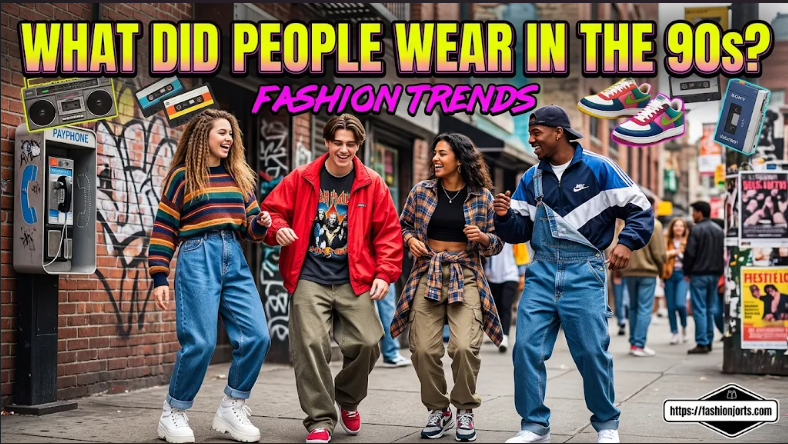
The 1990s were a time when fashion became more relaxed, personal, and influenced by popular culture. People wore baggy jeans, oversized T-shirts, flannel shirts, denim jackets, crop tops, slip dresses, and comfortable sneakers. Clothing choices reflected everything from alternative rock and hip-hop to television shows and designer collections. Unlike the bold, structured styles associated with the 1980s, much of 90s fashion focused on comfort and individuality. Some people preferred loose streetwear, while others chose fitted clothing, simple colours, and tailored outfits. These contrasting styles existed alongside one another, giving the decade its distinctive appearance. What someone wore also depended on their age, interests, and daily routine. Teenagers followed music and entertainment trends, working adults balanced professional clothing with increasingly casual styles, and designers introduced new interpretations of familiar garments.
What Was Fashion Like in the 1990s?
Fashion in the 1990s was defined by a growing preference for practical clothing. Jeans, T-shirts, sweaters, and sneakers became essential parts of everyday wardrobes. Although fashionable outfits varied considerably, comfort was a common priority.The decade also saw a stronger connection between clothing and cultural identity. Grunge fans wore faded denim and plaid shirts, while hip-hop enthusiasts embraced oversized silhouettes and sportswear. Minimalist fashion offered another option through simple designs and restrained colours. Clothing changed gradually throughout the decade. Early styles retained some influences from the late 1980s, while later years introduced cargo trousers, platform shoes, and more fitted tops. These developments helped establish several trends that remain familiar today.
What Did Women Wear in the 90s?
Women’s clothing during the 1990s ranged from relaxed denim outfits to elegant dresses and carefully coordinated separates. Everyday wardrobes often included jeans, fitted tops, cardigans, and comfortable shoes. Fashion magazines and television programmes introduced additional ideas that women adapted to their personal preferences.
High-Waisted Jeans and Casual Tops
High-waisted jeans were especially popular during the early part of the decade. These trousers typically fitted around the waist while providing more room through the hips and thighs. Women often paired them with tucked-in T-shirts, knitted sweaters, or casual button-down shirts. Denim overalls were another familiar choice for everyday dressing. They worked well with striped tops, plain shirts, and sneakers, making them practical for informal occasions. Straight-leg jeans remained popular, while flared and bootcut styles became more visible towards the end of the decade.
Slip Dresses, Mini Skirts, and Crop Tops
Slip dresses represented the simpler side of 1990s fashion. Usually made from lightweight materials, they featured narrow shoulder straps and an uncomplicated shape. Women wore them with delicate sandals for formal occasions or combined them with jackets and boots for a more casual appearance. Mini skirts and crop tops were particularly popular among younger women. Plaid skirts, fitted cardigans, and baby tees became recognisable elements of teenage fashion. These outfits frequently appeared in films, music videos, and youth magazines.
What Did Men Wear in the 90s?
Men’s fashion became increasingly informal during the 1990s. Loose jeans, graphic T-shirts, sweatshirts, and casual jackets were common choices outside professional settings. Sportswear also became an important influence on everyday clothing.
Baggy Jeans and Oversized Clothing
Baggy jeans were closely associated with hip-hop and skateboarding communities. Their wide legs and relaxed fit made them different from more traditional denim styles. Men often wore them with oversized shirts, hoodies, or basketball jerseys. Graphic T-shirts were another popular wardrobe item. Designs featuring musicians, sports teams, and clothing brands allowed people to express their interests. Simple white T-shirts also remained common because they could be combined with almost any casual outfit.
Flannel Shirts, Jackets, and Sportswear
Flannel shirts became especially recognisable through the grunge music scene. Men frequently wore them over plain T-shirts with faded jeans and sturdy boots. Their comfortable fit made them suitable for layering during cooler weather. Denim jackets, bomber jackets, and windbreakers were also fashionable. Tracksuits and athletic sweatshirts appeared increasingly often outside sporting activities. Sneakers became a natural choice for both casual outings and everyday errands.
The Fashion Trends That Defined the Decade
Several distinct movements influenced how people dressed during the 1990s. Music was particularly important, but films, television, and fashion designers also introduced new ideas. These styles appealed to different audiences and often overlapped.
Grunge Fashion
Grunge fashion developed alongside alternative rock music, particularly in the American Pacific Northwest. Its appearance was deliberately relaxed, favouring clothing that looked worn rather than carefully coordinated. Plaid shirts, ripped jeans, oversized sweaters, and combat boots became characteristic garments. Kurt Cobain and other musicians associated with the Seattle music scene helped bring this style to wider attention. Many followers bought second-hand clothing rather than expensive designer pieces. The movement challenged the idea that fashionable clothing needed to look polished or luxurious.
Hip-Hop Fashion
Hip-hop had a major influence on casual clothing throughout the decade. Oversized denim, tracksuits, sports jerseys, baseball caps, and chunky footwear became recognisable parts of the style. Artists frequently appeared in clothing that reflected their communities and personal identities. Women’s hip-hop fashion also challenged traditional expectations about feminine clothing. Loose trousers were often paired with fitted tops, while bold accessories added personality. Performers such as Aaliyah and TLC helped make these combinations widely recognisable.
Minimalist and Preppy Styles
Minimalist fashion focused on simple shapes, restrained colours, and understated details. Designers such as Calvin Klein and Jil Sander became associated with this approach. Plain dresses, tailored trousers, fitted knitwear, and uncomplicated jackets suited people who preferred a polished appearance. Preppy fashion offered a different interpretation of classic clothing. Polo shirts, plaid skirts, cardigans, loafers, and collared blouses were common elements. The 1995 film Clueless helped make coordinated school-inspired outfits especially memorable.
How 90s Fashion Changed From 1990 to 1999
The early 1990s featured high-waisted jeans, oversized sweatshirts, leggings, and denim jackets. Some clothing still reflected the colourful athletic styles of the previous decade. At the same time, alternative rock introduced grunge fashion to mainstream audiences. By the middle of the decade, clothing had become more varied. Minimalist dresses and simple tailoring gained attention, while hip-hop continued to influence oversized streetwear. Teenagers also embraced fitted cardigans, plaid skirts, and casual dresses. Towards the late 1990s, cargo trousers, flared jeans, platform shoes, and fitted tops became increasingly popular. Shiny fabrics and futuristic details began appearing in clothing as the new millennium approached. These developments helped establish the early foundations of Y2K fashion.
What Shoes and Accessories Were Popular?
Footwear was an important part of 1990s clothing. Converse sneakers and Dr. Martens boots were associated with alternative fashion, while basketball sneakers and Timberland boots appeared frequently in streetwear. Platform sandals and chunky shoes became particularly fashionable among young women during the later years. Accessories helped complete different outfits without requiring expensive clothing. Scrunchies, butterfly hair clips, chokers, and small sunglasses were familiar choices. Baseball caps, bucket hats, backpacks, and compact shoulder bags also appeared in everyday wardrobes. Hairstyles reflected the decade’s variety. Women experimented with layered cuts, bobs, and decorative hair clips, while men wore curtains, buzz cuts, and longer hairstyles. Braids, cornrows, and fades were also prominent within Black music and cultural communities.
What Did Teenagers Wear to School in the 90s?
Teenagers often chose clothing inspired by their favourite musicians, television characters, and sports personalities. Jeans, sweatshirts, graphic T-shirts, and sneakers were practical options for schools without uniforms. Different social groups developed preferences for particular fits, colours, and brands. Teenage girls commonly wore denim overalls, leggings, cardigans, and casual skirts. Boys often preferred loose jeans, hoodies, sports jerseys, and comfortable trainers. Skateboarding culture also influenced the popularity of wide trousers and durable footwear. Not every teenager followed the latest fashion. School dress codes, family budgets, and local preferences influenced what students could wear. Many everyday outfits were simpler than the carefully styled clothing seen in magazines and television programmes.
How to Recreate an Authentic 90s Outfit
Creating a 1990s-inspired outfit begins with choosing a particular style rather than combining every popular trend. For a casual appearance, high-waisted jeans with a plain T-shirt and sneakers work well. A denim jacket or oversized cardigan can add another recognisable element. A grunge-inspired outfit can feature faded jeans, a loose flannel shirt, and combat boots. For hip-hop-inspired streetwear, wider trousers, an oversized graphic T-shirt, and classic athletic shoes create a different silhouette. Minimalist clothing works best with simple fabrics, neutral colours, and limited accessories. Paying attention to clothing proportions makes the biggest difference. Early-90s casual outfits often featured higher waistlines, while streetwear favoured wider cuts. Choosing pieces that belong to the same fashion movement produces a more convincing result than mixing unrelated styles.
Conclusion
The 1990s gave people more freedom to experiment with clothing that suited their interests and lifestyles. Everyday fashion became increasingly comfortable, and casual garments gained acceptance in settings where more formal clothing had previously been expected. Music and entertainment introduced distinctive styles that reached audiences far beyond their original communities. Grunge encouraged relaxed dressing, hip-hop influenced streetwear, and minimalist designers demonstrated the appeal of simple clothing. The decade also showed that fashion did not need one dominant appearance. Oversized clothing, fitted dresses, sportswear, and tailored outfits could all be fashionable at the same time. For anyone interested in recreating the period, the best starting point is understanding how people combined ordinary garments. A few carefully chosen pieces can communicate the character of 1990s fashion without making an outfit feel like a costume.