A leather jacket can change the feel of an outfit without requiring a complete wardrobe makeover. It adds structure to casual clothing, works with different footwear, and gives simple combinations a more distinctive appearance. The secret is knowing which clothes complement its design. A fitted biker jacket needs different styling from a relaxed bomber, while a suede jacket often looks better with softer fabrics. Understanding these differences helps you create outfits that feel natural rather than forced.
Start with a Leather Jacket That Suits Your Style
Your choice of jacket sets the direction for the entire outfit. Some designs have a rugged appearance, while others offer a cleaner and more understated finish. A biker jacket is a good choice if you enjoy bold details and traditional denim combinations. Its zippers, lapels, and fitted shape make it stand out, so simple shirts and trousers work best underneath. A bomber offers more flexibility for everyday dressing. Its relaxed shape pairs easily with sweatshirts, knitwear, and casual trousers. If you prefer something understated, a café racer provides a clean silhouette with fewer decorative details.
Build Casual Outfits Around Simple Pieces
Pair a Leather Jacket with Straight-Leg Jeans
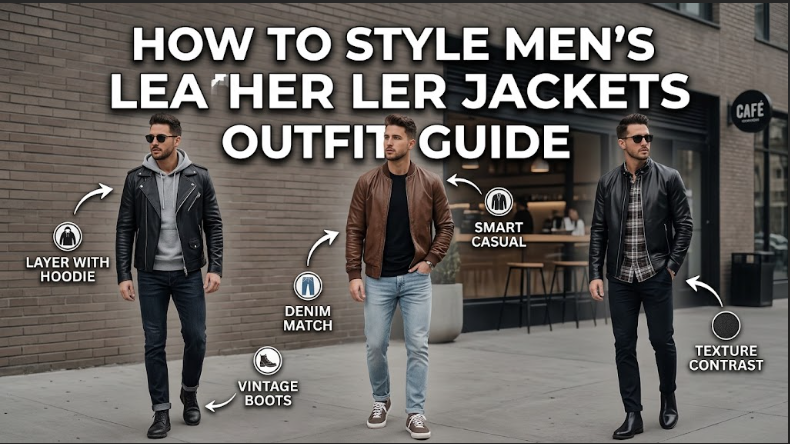
Straight-leg jeans create a balanced shape with most leather jackets. Their relaxed fit prevents the outfit from looking too tight, especially when paired with a fitted biker or café racer. Choose a white T-shirt and dark denim for a clean combination. Brown boots add a traditional finish, while simple sneakers make the outfit feel more relaxed. This is an easy option for everyday activities when comfort matters as much as appearance.
Wear a Hoodie Under a Leather Bomber
A hoodie gives a leather bomber a more relaxed character. Choose a neutral shade such as grey, black, or oatmeal so the layers complement each other. The jacket should have enough room to accommodate the hoodie without pulling around the shoulders. Pair the combination with dark jeans and understated trainers. Avoid thick hoodies if your outerwear already has a bulky construction.
Try a Denim Shirt for Added Texture
A denim shirt creates an interesting combination with smooth leather. The difference between the fabrics adds character without relying on bright colors or complicated patterns. Wear a light blue denim shirt under a dark leather jacket. Black or charcoal trousers provide contrast and keep the outfit looking coordinated. This combination works particularly well for informal dinners and weekend outings.
Create Smarter Outfits Without Looking Overdressed
Combine Leather with Tailored Trousers
Tailored trousers can make a leather jacket look more refined. Choose a minimalist design without excessive zippers or decorative hardware to keep the combination balanced. A black café racer works well with charcoal trousers and a lightweight knit. Complete the outfit with leather Chelsea boots or loafers. The result is suitable for casual workplaces, evening meals, and social occasions where a full suit would feel unnecessary.
Choose Knitwear Instead of a Basic T-Shirt
A fine-knit sweater changes the character of a leather jacket. It introduces softness and creates a more polished appearance without making the outfit formal. Cream, grey, and navy knitwear work particularly well with dark leather. You can wear the combination with straight-leg trousers or dark denim, depending on the occasion. Keep the sweater relatively lightweight so it sits comfortably beneath the jacket.
Use a Button-Down Shirt for a Cleaner Appearance
A button-down shirt provides a simple way to make leather outerwear look more presentable. White, light blue, and subtle striped shirts are useful choices because they complement most neutral jackets. Leave the collar open and avoid overly formal accessories. Dark jeans and leather shoes complete the outfit without making it look like traditional businesswear.
Experiment with Different Colors and Textures
Make Brown Leather Part of Your Everyday Wardrobe
Brown leather works naturally with earthy shades and lighter clothing. Pair it with olive trousers, cream knitwear, or faded blue denim for a relaxed appearance. The shade of brown also affects the overall look. Dark chocolate leather feels more understated, while lighter tan designs create a softer vintage-inspired appearance. Choose based on the colors you already wear rather than buying a jacket simply because it is fashionable.
Use Black Leather for Strong Contrast
Black leather creates a defined appearance against lighter fabrics. A cream sweater, white shirt, or light grey T-shirt can soften its darker finish. You can also build a monochromatic outfit with different black fabrics. Combining leather, cotton, and denim prevents the clothing from appearing like one flat block of color. Small differences in texture make the combination more interesting.
Introduce Suede for a Softer Finish
Suede has a brushed surface that looks less shiny than traditional leather. This makes it a good option for outfits built around knitwear, chinos, and relaxed tailoring. A tan suede jacket looks particularly good with navy trousers and a cream shirt. Brown loafers or clean sneakers complete the combination. Because suede is more vulnerable to moisture and staining, consider the weather before wearing it outdoors.
Choose Footwear That Complements the Jacket
Shoes can make the same jacket look completely different. Leather boots create a rugged appearance, while sneakers make an outfit more relaxed. Chelsea boots are a strong match for fitted jackets and tailored trousers. Their simple shape works particularly well with café racers and minimalist leather designs. Lace-up boots suit traditional biker jackets and heavier denim. For casual outfits, white sneakers offer a clean finish without competing with the jacket. Loafers are another option when wearing suede or a minimalist bomber with chinos. The main consideration is whether the footwear matches the overall formality and proportions of your clothes.
Get the Fit Right Before Adding Accessories
A leather jacket should follow your natural shoulder line without restricting movement. Its sleeves should reach your wrists, and the chest should allow enough room for comfortable layering. The length depends on the design. Biker jackets and café racers generally have shorter cuts, while some modern bombers use a roomier shape. Don’t choose an oversized design simply because it is available; check whether the shoulders and sleeves still look intentional. Accessories should support the outfit rather than dominate it. A simple watch, leather belt, or understated sunglasses are usually enough. If the jacket already has noticeable metal hardware, avoid adding several competing accessories.
Dress for the Weather
The material and lining determine when a leather jacket is comfortable to wear. Lightweight designs work better during mild spring weather, while lined bombers and shearling aviators offer more warmth during colder months. During summer, reserve leather outerwear for cooler evenings. Choose breathable clothing underneath to avoid unnecessary heat. In winter, add wool knitwear or thermal layers, but make sure the jacket still allows comfortable movement.
Keep Your Jacket Looking Good
Leather needs appropriate care to maintain its appearance. Remove dust with a soft cloth and follow the manufacturer’s cleaning instructions for the specific finish. If the jacket becomes wet, blot away excess moisture and allow it to dry naturally. Keep it away from direct heat, which can damage the material. Store it on a sturdy hanger to help preserve its shape. Suede requires separate products and cleaning methods. A suitable suede brush can help remove surface dirt, while a protective spray designed for suede may help reduce staining. Always test care products on an inconspicuous area first.
Conclusion
Styling a leather jacket is easier when you focus on fit, proportion, and clothing that complements its design. You don’t need to follow every fashion trend or buy several expensive pieces to create a good outfit. Start with familiar clothing and experiment with different textures and combinations. Choose a jacket that feels comfortable and suits the way you dress regularly. A simple design that works with your existing wardrobe will get more use than a statement piece that rarely leaves the closet. The best approach is to make the jacket feel like a natural part of your personal style.