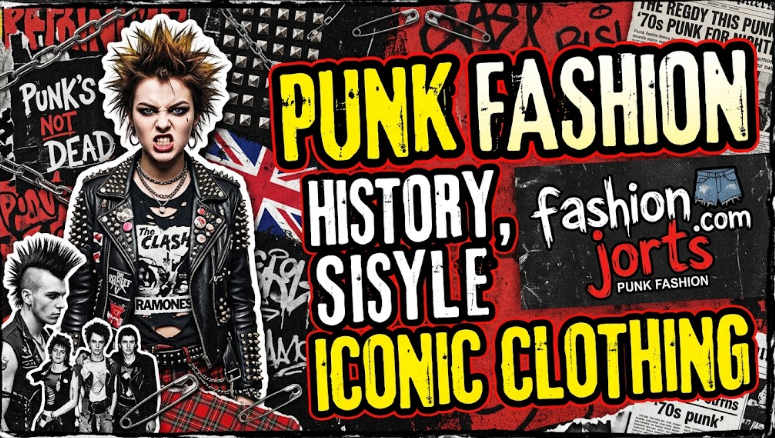
Punk fashion has never been about dressing neatly or following whatever happens to be popular. It grew from a culture that valued independence, experimentation, and the freedom to challenge accepted ideas. Torn clothing, leather jackets, heavy boots, metal details, and unusual hairstyles became visible signs of that attitude. The style became closely associated with punk music during the 1970s, especially in London and New York. Yet reducing it to a collection of rebellious-looking clothes misses much of the point. Punk encouraged people to take ordinary garments and make them personal, often with little concern for traditional ideas of good taste. That approach still explains much of the style’s appeal. You don’t need every recognizable punk accessory to create the look. Individual choices, thoughtful customization, and confidence matter more than following a fixed formula.
What Is Punk Fashion?
Punk fashion is a style connected to the punk music scene and the wider youth culture that developed around it. It deliberately challenged the polished appearance promoted by much of mainstream fashion. Clothes could look worn, altered, unfinished, or even damaged on purpose. A simple garment could become completely different after being cut, pinned, painted, patched, or written on. This gave people room to create clothing that reflected their personality rather than relying entirely on what shops offered. The do-it-yourself approach became one of the strongest characteristics of the style. There isn’t one correct punk outfit. Some people prefer a stripped-back combination of jeans, boots, and a jacket, while others choose dramatic hair, metal hardware, distressed fabrics, and layers of accessories. That variety is part of the culture rather than an exception to it.
Where Did Punk Fashion Begin?
Punk culture developed prominently during the 1970s, with important music scenes emerging in both New York and London. Musicians and their audiences began experimenting with clothing that looked very different from conventional styles of the period. The clothes often appeared rough, inexpensive, provocative, or intentionally unfinished. London’s scene became especially recognizable for its confrontational appearance. Young people combined everyday garments with leather, unusual graphics, torn materials, boots, and metal accessories. Fashion became another way to express the same frustration and independence found in the music. The look wasn’t created overnight. It borrowed from earlier youth cultures, workwear, motorcycle clothing, military garments, street style, and secondhand fashion. Punk changed those influences by combining them in ways that felt deliberately unexpected.
How Punk Fashion Took Shape in the 1970s
The earliest punk looks could be surprisingly simple. A worn T-shirt, narrow trousers, old sneakers, or a battered jacket could be enough. Clothing didn’t need to look expensive, and visible wear could actually make an outfit more convincing. As the movement gained attention, more dramatic elements became associated with it. Ripped shirts, bondage-inspired trousers, leather jackets, heavy boots, provocative prints, chains, and safety pins created a harder appearance. Hair and makeup also became opportunities for experimentation. This period established an idea that would survive long after the original scene changed. Clothing didn’t have to be protected from alteration. Cutting, repairing, decorating, and rebuilding garments could become part of fashion itself.
Vivienne Westwood and Malcolm McLaren’s Influence on Punk
Vivienne Westwood and Malcolm McLaren became closely connected with British punk through their clothing shop on London’s King’s Road. The shop changed names and direction several times as their interests developed. Its provocative clothing eventually became strongly associated with London’s emerging punk scene. Westwood’s designs challenged conventional ideas about construction and respectable dress. Torn fabrics, unusual prints, straps, chains, distressed knitwear, and bondage-inspired pieces gave clothing an intentionally confrontational quality. These garments also mixed references from different sources rather than following one established fashion tradition. Their connection with punk musicians gave the clothing greater visibility. Yet Westwood’s importance extends beyond a handful of famous garments. Her work demonstrated how ideas emerging from youth culture could challenge the boundaries between street clothing and designer fashion.
What Clothes Define Punk Fashion?
Leather jackets are probably among the most recognizable pieces, partly because they can be customized so easily. A plain jacket can gradually collect patches, badges, painted lettering, studs, or other personal details. The wear that develops over time can become part of its character. Denim offers similar freedom. Jeans may be ripped, patched, faded, written on, or repaired with contrasting fabric. Denim jackets also provide plenty of space for artwork and references to favorite bands. Graphic T-shirts, dark trousers, plaid pieces, distressed knitwear, and heavy footwear can complete the wardrobe. These items don’t need to appear together, however. A restrained outfit with one or two strong details can communicate the style better than an overloaded costume.
Why Leather Jackets Became a Punk Staple
Leather jackets already carried associations with motorcycles, rock music, and rebellious youth before punk appeared. That history made them a natural fit for musicians and fans who wanted clothing with a tougher appearance. Leather was also durable enough to survive repeated wear and customization. Personalization turned the jacket into something more individual. Owners could add band names, slogans, patches, pins, paint, or studs instead of leaving the garment untouched. Two people might start with similar jackets and end up with completely different pieces. Modern versions range from heavily decorated biker jackets to much cleaner designs. Someone exploring the style today doesn’t need an elaborate piece. A worn leather or faux-leather jacket paired with simple clothes can provide the same strong visual foundation.
Safety Pins, Chains, Studs and the DIY Punk Aesthetic
Punk turned ordinary hardware into visible decoration. Safety pins could hold torn fabric together while becoming part of the design rather than remaining hidden. Chains, buckles, rings, studs, and exposed zippers added a harder texture to otherwise familiar clothing. These details worked because they challenged expectations. Fashion traditionally tried to hide repairs and construction methods, while punk often displayed them openly. A tear didn’t necessarily need to disappear, and a fastening didn’t need to remain invisible. DIY styling also made experimentation accessible. People could change inexpensive or secondhand garments instead of replacing their entire wardrobe. That spirit of adaptation remains more meaningful than simply covering an outfit with accessories.
Punk Hairstyles and Makeup
Hair became another way to reject conventional appearance. Spiked styles, shaved sections, dramatic shapes, and unnatural colors all appeared across different punk scenes. Later interpretations pushed these ideas further with increasingly elaborate cuts and styling. Makeup could be equally expressive. Heavy eyeliner, dark shades, deliberately rough application, or unexpected colors created looks that didn’t necessarily aim to appear traditionally glamorous. Men and women could both experiment without following ordinary beauty rules. There was no single required hairstyle or makeup look. Some musicians and fans appeared extremely dramatic, while others kept their appearance comparatively simple. That contrast is useful to remember when creating a modern outfit.
Women’s Punk Fashion
Women’s punk style challenged expectations about how women were supposed to present themselves. Feminine garments could be combined with leather, torn tights, boots, oversized jackets, or aggressive accessories. Other looks rejected conventional femininity almost entirely. Dresses and skirts didn’t disappear from the style. Instead, they could be distressed, layered, shortened, combined with unconventional footwear, or worn alongside harder pieces. Contrasts between delicate and rough materials often created particularly striking outfits. The result gave women considerable freedom to experiment with silhouette and presentation. Punk didn’t require dressing according to one ideal body shape or polished beauty standard. Individual expression remained more important than conventional coordination.
Men’s Punk Fashion
Men’s punk clothing often starts with relatively straightforward pieces. Narrow jeans or trousers, graphic shirts, leather or denim jackets, and boots provide an easy foundation. Customization can then give those basics more personality. Fit can vary considerably. Some outfits use close-fitting trousers and jackets, while others incorporate oversized shirts, distressed knitwear, or looser workwear. Mixing proportions prevents the style from becoming too predictable. Accessories should feel intentional rather than compulsory. A chain, belt, patch-covered jacket, or pair of heavy boots can provide enough character without adding every traditional punk symbol at once.
Different Types of Punk Style
Punk changed as different music scenes and communities developed their own identities. Some styles remained close to the rough leather-and-denim appearance associated with early punk. Others became more colorful, theatrical, political, or practical. Hardcore scenes often favored straightforward clothing that made sense in energetic live environments. Other interpretations placed greater emphasis on elaborate hairstyles, heavily customized jackets, plaid fabrics, or extensive metal detailing. Later styles also borrowed from goth, skate, streetwear, and alternative fashion. These differences make strict definitions difficult. Punk works better as a broad family of approaches than as a uniform. Music, location, generation, and personal taste can all change how someone interprets it.
How Punk Influenced High Fashion
Fashion designers eventually began borrowing ideas that had once looked deliberately anti-fashion. Distressed materials, visible seams, unfinished edges, safety pins, exaggerated hardware, and deconstructed garments moved onto designer runways. Elements associated with rebellion became part of commercial fashion. That shift created an interesting contradiction. Early DIY styling allowed people to transform cheap or existing clothing, while designer interpretations could cost substantial amounts. The appearance remained similar even when the circumstances behind it changed completely. Still, punk expanded what designers could consider beautiful or finished. Clothing no longer had to hide every raw edge, repair, or construction detail. Imperfection itself could become a deliberate design choice.
How to Wear Punk Fashion Today
Building a modern outfit is easier if you begin with familiar clothes. Jeans, a graphic T-shirt, boots, and a leather or denim jacket provide plenty to work with. From there, one or two personal details can make the outfit distinctive. Try modifying pieces you already own rather than purchasing an entire themed wardrobe. Patches, pins, visible repairs, painted details, or altered hems can give old clothes another life. Secondhand shopping also works naturally with a style that has always valued adaptation. Most importantly, don’t chase perfect authenticity. Punk developed by challenging rules rather than carefully obeying them. A personal outfit with a few meaningful details usually feels more convincing than copying every recognizable symbol at once.
Conclusion
Punk fashion survived because its strongest idea was never tied to one garment. It gave people permission to interfere with their clothes, question conventional taste, and turn imperfections into intentional design. Its visual vocabulary has changed as new generations have interpreted it. Some people prefer the stripped-back energy of early punk, while others embrace elaborate hair, heavy customization, or influences from neighboring alternative styles. Neither approach needs to function as a strict historical recreation. For anyone interested in the look today, individuality remains the most useful starting point. Choose clothes that already feel right, alter them thoughtfully, and allow the outfit to develop its own character.