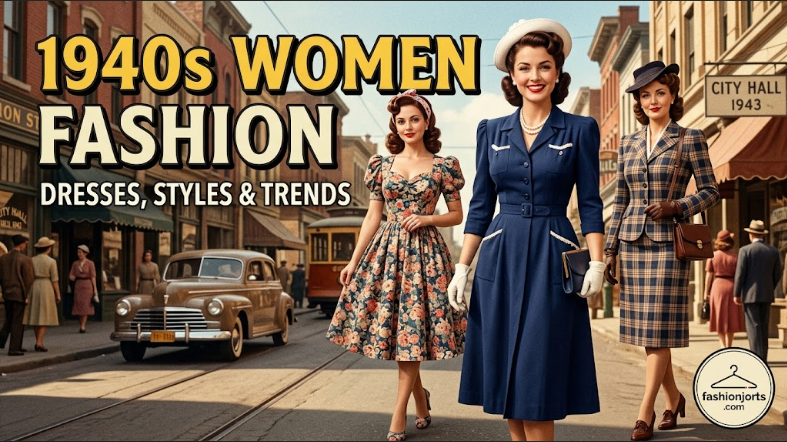
1940s women fashion was shaped by a decade of dramatic social change. The early years favored practical clothing with structured shoulders, neat waistlines, and restrained skirts, while the end of the decade brought softer shapes and greater glamour. Clothing had to work around wartime shortages, changing jobs, and limited access to materials. Yet practicality did not remove personality from fashion. Women used prints, hats, hairstyles, makeup, and carefully chosen accessories to make simple outfits feel distinctive. By the late 1940s, fuller skirts and defined waists were creating a very different look from the restrained styles seen during the war.
What Did Women Wear in the 1940s?
Everyday wardrobes usually centered on dresses, skirts, blouses, jackets, and suits. Clothes tended to sit close to the body without being overly tight, and the waist was often clearly defined. Strong shoulders gave many outfits the sharp silhouette associated with the period. Clothing also depended on a woman’s routine. An office worker might choose a tailored skirt suit, while someone doing physical work needed trousers or overalls that allowed easier movement. Social occasions offered more room for decorative fabrics, attractive necklines, and carefully selected accessories.
How World War II Changed Women’s Fashion
The war placed pressure on clothing production because fabric and other materials were needed elsewhere. Designers and manufacturers responded by reducing unnecessary details and creating garments that required less material. Wide hems, excessive decoration, and other fabric-heavy features became less practical. Women also learned to extend the life of existing clothes. Dresses could be altered, damaged garments repaired, and usable fabric taken from older pieces. This practical approach made sewing and clothing care particularly valuable household skills.
1940s Women’s Dresses and Everyday Clothing
Day dresses offered an easy way to look presentable without creating a complicated outfit. Many designs emphasized the waist and shoulders while keeping the skirt relatively simple. Buttons, collars, belts, and modest decorative details added interest without overwhelming the garment. Shirt-style dresses worked particularly well for daily wear. Floral prints, checks, dots, stripes, and plain fabrics gave women choices despite the practical construction of many garments. A belt could further define the waist and give a straightforward dress a smarter finish.
Women’s Suits and the Wartime Silhouette
Tailored suits became closely associated with 1940s style. Jackets often had pronounced shoulders and a fitted shape, while skirts generally followed a clean, controlled line. The result looked polished but remained practical enough for work and daily activities. Separate pieces also made a limited wardrobe more flexible. A jacket could be paired with another skirt, and changing the blouse or accessories could give the same suit a different appearance. That versatility was useful at a time when replacing clothing wasn’t always easy.
How Trousers Became Part of Women’s Fashion
Trousers had appeared in women’s wardrobes before the 1940s, particularly for leisure and certain activities. Wartime employment, however, gave them greater practical importance. Factory, farm, and industrial work often required clothing that allowed women to move freely and safely. High-waisted trousers became one of the decade’s recognizable styles. They were commonly worn with tucked-in shirts, blouses, or practical tops. Their growing visibility also helped establish trousers as a more familiar part of women’s everyday clothing.
1940s Women’s Workwear and Factory Clothing
Workwear focused on safety rather than decoration. Overalls, coveralls, trousers, sturdy footwear, and fitted shirts suited jobs involving machinery or physical activity. Loose fabric could become dangerous, so garments needed to remain secure while allowing comfortable movement. Hair also had to be kept under control in many workplaces. Scarves and other practical head coverings helped keep it away from machinery. These functional outfits became closely connected with the public image of women contributing to the wartime workforce.
Popular Shoes Women Wore in the 1940s
Everyday shoes generally balanced appearance with practicality. Pumps, lace-up shoes, sturdy low heels, and moderate-height heels worked well with dresses and tailored suits. Women who spent long hours working needed footwear that could handle considerably more activity. Dressier shoes could be saved for evenings and special occasions. Small design details helped distinguish them from everyday footwear without requiring extravagant construction. The overall approach reflected the practical character found throughout much of the decade.
Stockings and Hosiery During Wartime Shortages
Stockings were an established part of a polished outfit, but shortages made them harder to obtain during the war. Women therefore had to be resourceful when hosiery wasn’t available. Some used cosmetic products on their legs to imitate the appearance of stockings. A visible seam down the back of the leg was strongly associated with period hosiery. Women could imitate that detail by drawing a line down the leg. Once stockings became easier to purchase after the war, they quickly returned to everyday wardrobes.
1940s Women’s Hairstyles
Hair provided plenty of room for creativity even when clothing choices were restricted. Soft waves, pin curls, rolled sections, and carefully arranged updos were common features of fashionable hairstyles. Victory rolls remain one of the most recognizable looks associated with the decade. Not every woman wore an elaborate hairstyle every day. Shoulder-length cuts with curled ends could provide a simpler appearance, while scarves helped control hair during work. The best hairstyle often depended as much on daily responsibilities as fashion.
Makeup and Beauty Trends of the 1940s
Makeup generally complemented the polished appearance of the period rather than competing with it. Defined lips were particularly noticeable, with richer lipstick shades creating contrast against relatively simple clothing. Groomed eyebrows and an even-looking complexion completed the effect. Beauty routines also gave women a way to change their appearance without purchasing another outfit. A different hairstyle or lipstick could refresh a familiar dress or suit. Small details therefore carried considerable visual importance.
Hats, Gloves and Other Popular Accessories
Hats appeared in numerous forms, from small structured designs to styles worn at an angle. Scarves were equally useful because they could decorate an outfit, cover the hair, or serve a practical purpose at work. Handbags completed many daytime outfits. Gloves were commonly associated with smarter dressing and social occasions. Jewelry could provide another finishing touch, although accessories didn’t need to be elaborate. A carefully chosen hat or brooch could make a simple dress look noticeably different.
Popular Colors, Fabrics and Patterns
The decade wasn’t limited to dark military-inspired colors. Women wore blues, greens, reds, browns, creams, and other shades, depending on the garment and available materials. Prints brought additional variety to dresses and blouses. Floral patterns offered a softer alternative to structured tailoring, while checks, stripes, and dots created strong visual designs. Fabric availability could affect what manufacturers produced during wartime. After the war, designers gained greater freedom to experiment with volume and decorative detail.
British Utility Fashion and Make Do and Mend
British wartime clothing placed strong emphasis on economy and durability. Utility garments were designed to provide dependable clothing while controlling unnecessary use of scarce materials. Simple construction didn’t necessarily mean unattractive clothing, as careful tailoring could still produce a smart appearance. The idea of making do also encouraged creativity at home. Older clothes could be resized, repaired, or redesigned rather than discarded. This practical culture gave garments longer lives and made personal sewing skills especially useful.
American Women’s Fashion in the 1940s
American fashion shared the decade’s preference for defined shoulders and practical silhouettes but also developed a strong sportswear identity. Comfortable separates allowed women to combine different pieces instead of relying solely on complete matching outfits. This approach suited increasingly active lifestyles. Casual clothing became especially useful outside formal settings. Trousers, shirts, sweaters, and simple dresses offered flexibility while still maintaining a tidy appearance. The combination of practicality and polished styling became a lasting feature of American womenswear.
How Hollywood Influenced 1940s Women’s Style
Movies offered audiences a more glamorous interpretation of contemporary fashion. Film stars appeared in beautifully tailored suits, elegant evening dresses, carefully arranged hairstyles, and striking makeup. Their appearance provided inspiration even when viewers couldn’t afford or obtain similar clothes. Women could still borrow individual elements from screen fashion. A hairstyle, lipstick shade, neckline, or accessory was easier to recreate than an entire designer wardrobe. Hollywood therefore helped keep glamour visible during a decade often dominated by practical concerns.
Christian Dior and the 1947 New Look
A major change arrived in 1947 when Christian Dior introduced a dramatically different silhouette. Shoulders became softer, waists appeared narrower, and skirts grew longer and much fuller. The style stood in sharp contrast to the economical shapes associated with wartime clothing. The look also required considerably more fabric than many earlier wartime garments. That made it both exciting and controversial in societies still recovering from shortages. Despite the debate, its influence quickly became visible and helped establish the direction women’s fashion would take into the 1950s.
Early 1940s vs. Late 1940s Women’s Fashion
Early and mid-decade clothing generally reflected wartime practicality. Strong shoulders, restrained skirts, versatile separates, and work-friendly garments created a structured appearance. Clothing needed to serve everyday life while making sensible use of available materials. Late-decade fashion gradually moved toward a more pronounced hourglass shape. Skirts became longer and fuller, shoulders softened, and the waist received greater emphasis. Looking at these periods separately gives a much more accurate picture than treating the entire decade as a single style.
How to Recreate a 1940s Women’s Outfit Today
Start by deciding which part of the decade you want to represent. For a wartime-inspired outfit, combine a knee-length skirt or high-waisted trousers with a tucked blouse and structured jacket. Moderate heels or lace-up shoes and softly curled hair can complete the period influence. For a late-1940s appearance, choose a longer, fuller skirt with a strongly defined waist and softer shoulders. Accessories should support the outfit rather than dominate it. Paying attention to silhouette usually creates a more convincing result than adding every vintage detail at once.
Conclusion
The most interesting feature of 1940s women fashion is how closely clothing followed everyday life. Wartime needs encouraged economical construction, versatile wardrobes, practical work clothes, and careful maintenance of garments. Style survived, but it often had to work within strict practical limits. Women also found other ways to express themselves. Hairstyles, cosmetics, prints, hats, and accessories could change the character of familiar clothing without requiring an entirely new wardrobe. This combination of practicality and personal style gives wartime fashion much of its recognizable character. The final years of the decade pointed in another direction. Fuller skirts and more strongly defined waists signaled a renewed appetite for decorative fashion and helped establish the silhouettes that would dominate the following decade. For anyone interested in wearing the style today, choosing a specific period produces the most convincing result. A wartime outfit from the early 1940s and a fashionable ensemble from 1949 belong to the same decade, but they tell distinctly different stories.