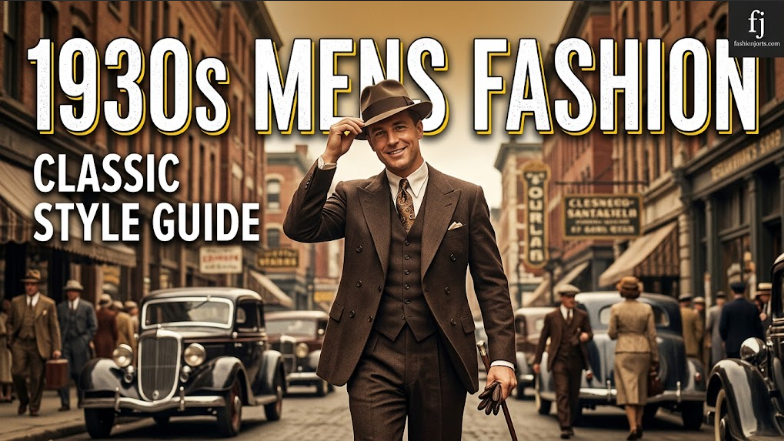
The 1930s was a defining decade for men’s fashion, creating a style that balanced elegance, comfort, and practicality. After the relaxed silhouettes of the 1920s, men’s clothing became more structured, with stronger shapes and sharper tailoring. The decade introduced many styles that are still recognized today, especially the broad-shouldered suit, high-waisted trousers, and classic accessories. Fashion during this period was influenced by changing lifestyles, economic conditions, cinema, and social expectations. A man’s clothing was often seen as a reflection of his character, so details such as a well-fitted jacket, polished shoes, and a proper hat mattered greatly.
The Signature Look of 1930s Menswear
The typical 1930s gentleman’s outfit focused on clean lines and a confident shape. Jackets became wider at the shoulders, creating a stronger upper body appearance, while trousers offered more room and comfort. Unlike modern slim-fitting clothing, 1930s styles allowed fabric to move naturally with the body. The goal was not to make clothing tight but to create balance between each piece. A jacket, trousers, shirt, tie, and accessories were chosen to work together as one complete look. Men commonly wore suits for work, social events, and even everyday activities. Looking well dressed was considered a sign of respect and good manners.
The Popularity of Wide-Shouldered Suits
The suit became the centerpiece of men’s wardrobes during the decade. One of the most recognizable designs was the drape suit, which created a relaxed yet powerful appearance.
These suits featured:
- Broad shoulders
- Fuller chest areas
- Longer jackets
- Wider lapels
- Comfortable sleeves
The style gave men a more athletic shape while allowing freedom of movement. It became especially popular among businessmen, celebrities, and public figures who wanted a sophisticated appearance.
Three-Piece Suits and Formal Dressing
Three-piece suits remained a major part of men’s fashion in the 1930s Mens Fashion. The combination of a jacket, trousers, and waistcoat created a polished appearance suitable for many occasions. The waistcoat added an extra layer of style and helped men maintain a neat look even when they removed their jackets. Many suits were made from wool because it was durable and suitable for different seasons. Common suit patterns included stripes, checks, and subtle textures. These designs allowed men to show personality while maintaining a traditional appearance.
High-Waisted Trousers Became a Defining Feature
Trousers during the 1930s had a very different shape from today’s styles. They were worn higher on the waist and usually had a fuller cut through the legs. Many trousers included pleats at the front, which provided extra comfort and movement. Turned-up cuffs were also popular because they added structure and helped complete the wider silhouette. The combination of roomy trousers and structured jackets created the balanced shape that became closely associated with the decade.
Shirts and Ties Added Personal Style
While suits created the foundation of an outfit, shirts and ties allowed men to express individuality. Dress shirts often featured larger collars that matched the proportions of wider jackets. White shirts remained a classic choice, but striped and patterned shirts were also common for business and casual wear. Ties were usually wider than modern versions and came in different patterns, including stripes and geometric designs. A carefully selected tie could add color and personality to an otherwise traditional suit.
Why Hats Were Important in the 1930s
Hats were a normal part of everyday dressing during this period. Many men considered a hat an essential finishing touch before leaving the house.
Popular hat styles included:
- Fedora
- Homburg
- Flat cap
- Trilby
The choice of hat often depended on the occasion. Formal events called for more structured styles, while working men often preferred practical caps. The decline of daily hat-wearing came much later, but during the 1930s, hats were closely connected with the image of a well-dressed man.
Shoes and Accessories Completed the Outfit
Men’s fashion in the 1930s paid close attention to details. Shoes were expected to be clean, polished, and suitable for the rest of the outfit. Popular footwear included leather lace-up shoes, brogues, and two-tone styles. These designs added character while keeping a formal appearance. Other important accessories included pocket squares, watches, tie clips, and belts. Small details helped create a complete and carefully planned look.
Casual Clothing Became More Popular
Although formal suits dominated the decade, casual clothing slowly became more accepted. Leisure activities and outdoor hobbies influenced the way men dressed outside work. Sports jackets, knitted sweaters, cardigans, and tweed coats became popular choices for relaxed occasions. Men wanted clothing that offered comfort but still looked refined. This shift helped introduce a more flexible approach to dressing, where men could appear stylish without always wearing a full suit.
Hollywood’s Influence on Men’s Style
The film industry had a major effect on fashion during the 1930s. Movie stars became examples of modern style, and audiences often copied their clothing choices. Actors such as Cary Grant, Clark Gable, and Fred Astaire were known for their elegant suits and confident appearances. Their styles helped popularize sharp tailoring and sophisticated dressing around the world. Hollywood also introduced a sense of glamour, showing men that fashion could be both practical and expressive.
Evening Fashion and Special Occasions
Formal events required carefully chosen clothing in the 1930s. Men often wore dinner jackets, tuxedos, bow ties, and formal leather shoes. Evening wear focused on simplicity and elegance. Dark colors, clean tailoring, and high-quality fabrics created a refined appearance without unnecessary decoration. The formal styles of the decade continue to influence modern black-tie fashion.
How 1930s Fashion Influences Modern Menswear
Many modern designers still look to the 1930s for inspiration. High-waisted trousers, wider suit cuts, textured fabrics, and vintage accessories have returned in different forms. The reason this decade remains popular is simple: the clothing was designed around proportion and confidence. Instead of following short-lived trends, 1930s fashion focused on creating a strong and lasting appearance. Men today can take inspiration from this era by choosing better fits, classic pieces, and timeless accessories.
Conclusion
The 1930s created a unique chapter in men’s fashion by combining traditional tailoring with a more comfortable approach to clothing. The decade showed that style was not only about appearance but also about confidence and personal presentation. From structured suits to carefully chosen accessories, every part of a man’s outfit had a purpose. The influence of this period continues because its focus on fit, quality, and timeless design remains relevant. For anyone interested in classic menswear, the 1930s offers inspiration that goes beyond nostalgia. It represents a style built on confidence, craftsmanship, and attention to detail.