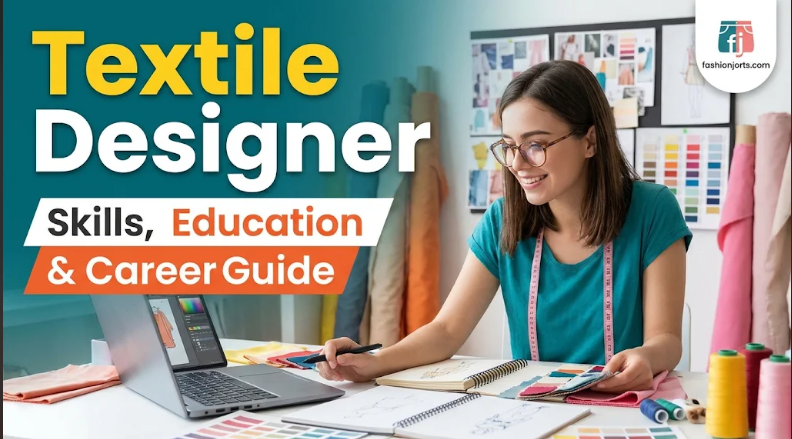
The fabric of a favourite shirt, the pattern on a curtain, or the texture of a comfortable sofa often starts with a textile designer. These creative professionals develop fabric patterns, colours, and textures that appear in clothing, furniture, and everyday products. Their work requires artistic ability, technical knowledge, and an understanding of how different materials behave. For someone who enjoys drawing, experimenting with colours, or working with fabrics, textile design can offer an interesting career. However, the profession involves more than producing attractive artwork. Designers must understand manufacturing methods, communicate with production teams, and create materials that meet practical requirements.
What Is a Textile Designer?
A textile designer creates patterns, prints, textures, and fabric structures for use in different industries. Their designs appear on clothing, bedding, curtains, carpets, furniture, and decorative accessories. Some professionals concentrate on the appearance of fabric, while others work on its structure and physical properties. The profession combines creative thinking with practical production skills. Designers consider how colours appear on different materials, how patterns repeat across fabric, and whether a particular design suits its intended purpose. Their decisions influence both the appearance and usability of finished products.
What Does a Textile Designer Do?
A textile designer usually begins a project by understanding what a client or manufacturer needs. The brief may describe the intended product, preferred colours, fabric type, and target customers. Designers use this information to develop sketches, select materials, and experiment with different ideas. After choosing a design direction, they prepare digital artwork or physical samples. These samples help determine whether the colours, patterns, and textures work as expected. Changes may be necessary before the fabric is approved for production. Designers also collaborate with manufacturers, fashion teams, and product developers. They check that patterns can be reproduced accurately and that the selected materials meet the product’s requirements. This combination of creative and technical responsibilities makes the work varied.
Different Types of Textile Design
Textile design includes several specialisations, each involving different materials and production methods. Some designers work mainly with decorative surfaces, while others concentrate on how fabrics are constructed. Understanding these areas can help beginners identify the type of work they find most interesting.
Printed Textile Design
Printed textile designers create patterns that are applied to fabric surfaces. Their work includes floral illustrations, geometric shapes, abstract artwork, and decorative prints for clothing or home furnishings. They often develop repeating patterns that can continue across large sections of fabric. Colour selection is particularly important in this field. A design may need several colour variations for different collections or customers. Designers must also consider how the chosen printing method affects the finished appearance.
Woven and Knitted Textile Design
Woven textile designers develop fabrics by arranging yarns into specific structures. Different weaving methods can produce smooth, textured, lightweight, or heavier materials. These fabrics are used in clothing, upholstery, and household products. Knitted textile designers work with interconnected loops of yarn. Their designs can influence the stretch, thickness, and flexibility of a material. This specialisation is particularly relevant to sweaters, sportswear, and other knitted garments.
Interior and Home Textile Design
Interior textile designers create fabrics for furniture, curtains, cushions, bedding, and other household products. Their work often involves selecting colours and textures that suit particular spaces. They may collaborate with interior designers or furniture manufacturers. Practical performance is especially important for these products. Upholstery fabrics, for example, must withstand regular use, while curtain materials may require particular levels of light control. Designers must balance decorative appeal with everyday functionality.
Essential Skills for Textile Designers
Creative ability provides the foundation for textile design, but professional work requires several additional skills. Drawing helps designers communicate ideas, while knowledge of colour theory supports the development of balanced patterns. Understanding fibres and fabric construction also helps them select suitable materials. Digital design skills are valuable because many companies use computer software during product development. Adobe Illustrator and Photoshop allow designers to create artwork, adjust colours, and prepare repeating patterns. Specialist textile software may be used for more technical work involving weaving or knitting. Attention to detail is another important quality. Small mistakes in pattern alignment or colour selection can become obvious when a design is reproduced across a large fabric surface. Designers also need communication and time-management skills to work effectively with clients and production teams.
How to Become a Textile Designer
A common route into the profession is studying textile design, fashion and textiles, or a related subject at college or university. These courses introduce students to drawing, fabric construction, printing methods, and digital design. Practical assignments provide opportunities to experiment with materials and develop original work. Formal education is useful, but it is not the only way to enter the industry. Some people develop their abilities through workshops, apprenticeships, or assistant positions. Learning directly from experienced professionals can provide valuable knowledge about production techniques and workplace expectations. Building a portfolio is one of the most important steps for aspiring designers. A good portfolio should include original patterns, sketches, colour experiments, and photographs of completed fabric samples. Employers can then assess both the applicant’s creativity and ability to develop practical designs.
Textile Designer Salary and Career Opportunities
Textile designer salaries depend on experience, location, employer, and the type of work involved. Entry-level professionals generally earn less than experienced designers who manage projects or supervise creative teams. Freelance earnings can vary according to the number and value of available commissions. Employment opportunities exist in fashion companies, textile factories, home furnishing businesses, and independent design studios. Some professionals work closely with manufacturers, while others concentrate on developing collections for retailers. Designers may also specialise in products such as carpets, upholstery, or printed clothing. With experience, a designer may progress into senior design, creative management, or product development. Others establish independent businesses and sell original patterns or provide design services to clients. Career progression often depends on the quality of a designer’s portfolio and practical industry experience.
How Textile Design Is Changing in 2026
Digital technology continues to influence how fabrics are designed and developed. Computer-aided design tools allow professionals to experiment with patterns, adjust colour combinations, and prepare artwork without repeatedly producing physical samples. Digital printing also makes it possible to reproduce detailed artwork on suitable materials. Environmental concerns are influencing decisions about fibres, dyes, and manufacturing methods. Designers may consider recycled materials, fabric durability, and ways to reduce waste during production. These choices require careful evaluation because the environmental impact of a textile depends on more than its appearance or fibre label. Despite these developments, traditional textile knowledge remains valuable. Understanding how yarns behave, how colours respond to different fabrics, and how materials are manufactured helps designers make informed decisions. Technology supports the creative process, but it cannot replace practical knowledge of textiles.
Conclusion
Textile design offers an opportunity to combine artistic interests with practical knowledge of materials and production. The profession involves developing fabrics that meet creative expectations while remaining suitable for their intended use. It can appeal to people who enjoy solving design problems and experimenting with different techniques. A successful career requires patience and continued learning. Understanding fabric construction, developing digital skills, and gaining experience with production methods can help designers improve their work. These abilities become increasingly valuable when handling professional projects. There is also considerable freedom to specialise. Some designers prefer decorative prints, while others are more interested in knitted fabrics, woven structures, or interior products. Exploring different techniques can help beginners discover where their strengths lie. For anyone considering this profession, creating a small collection of original fabric designs is a useful starting point. Experimenting with materials and documenting the development process can provide valuable experience while helping build a professional portfolio.