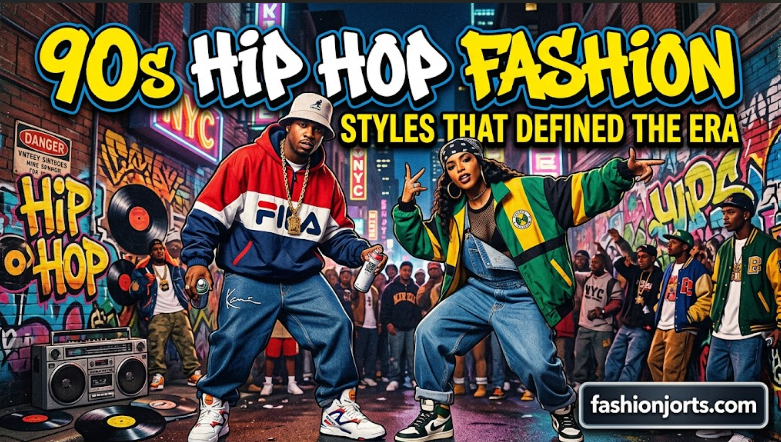
The 1990s gave hip-hop fashion a look that is still easy to recognise today. Oversized jeans, sports jerseys, fresh sneakers, tracksuits, baseball caps, gold jewellery, and bold streetwear became part of everyday style. What made the decade different was the freedom to mix these pieces without following traditional fashion rules. Hip-hop artists also became style leaders. Their clothes appeared in music videos, magazines, concerts, and television, giving fans new ideas about how to dress. From colourful streetwear to darker city looks and designer pieces, the decade offered many different ways to express personality through clothing.
What Made 90s Hip-Hop Fashion Different?
The biggest change was the attitude toward clothing. Clothes did not need to look neat, fitted, or formal to make an impression. A loose shirt could be worn with wide-leg jeans, a pair of sneakers, and a simple cap, creating an outfit that felt relaxed but still carefully chosen. Comfort was important, but appearance mattered too. The right colours, brands, accessories, and footwear could completely change a basic outfit. People also mixed expensive pieces with affordable everyday clothing, making the style personal rather than uniform.
Baggy Jeans Became a Signature
Baggy jeans were one of the most recognisable parts of the decade. Instead of slim or fitted denim, people often chose jeans with wide legs and plenty of room through the hips and thighs. The jeans were usually paired with oversized T-shirts, sweatshirts, jerseys, or jackets. Some outfits used simple blue denim, while others included darker washes, coloured denim, or heavily branded designs. The appeal was partly about freedom of movement, but the loose shape also created a strong visual identity. Even today, a pair of wide jeans with sneakers can immediately give an outfit a 90s-inspired feel.
Jerseys, Tracksuits and Everyday Sportswear
Sports had a major influence on youth fashion during the decade. Basketball jerseys, baseball caps, athletic jackets, sweatshirts, and tracksuits moved comfortably from the court or training ground into everyday life. Basketball jerseys were often worn over a T-shirt and combined with loose jeans or shorts. Tracksuits offered another option, especially for people who wanted an outfit that looked coordinated without being formal. This combination of comfort and style helped make sportswear a natural part of street fashion. It also allowed people to show their interests through team colours, logos, and athletic designs.
Sneakers Were Part of the Outfit
Sneakers were never an afterthought. They could be the piece that brought the entire outfit together. Basketball-inspired shoes, high-top sneakers, classic running shoes, and other athletic designs were popular choices. Clean shoes were especially important because footwear could make a simple outfit look much more intentional. A typical combination might include loose jeans, an oversized shirt, a baseball cap, and a favourite pair of sneakers. The outfit did not need many additional pieces to work.
Timberland Boots and Workwear
Not every 90s hip-hop outfit revolved around sneakers. Workwear also became an important influence, particularly in urban styles associated with the East Coast. Sturdy boots, heavy jackets, work shirts, and loose denim created a tougher appearance than colourful sportswear. Timberland-style boots became particularly recognisable when worn with wide jeans. This mixing of practical clothing with street fashion was an important part of the decade. Clothes did not have to come from a traditional fashion collection to become fashionable.
The Brands That Shaped the Look
The 1990s saw the rise of several brands that understood the connection between clothing and hip-hop culture. Cross Colours became known for bold colours and culturally inspired designs. Karl Kani became associated with oversized denim and relaxed streetwear. FUBU built its identity around clothing created with Black consumers and hip-hop culture in mind. Other brands, including Tommy Hilfiger, Polo Ralph Lauren, Nautica, and Coogi, also became popular within different parts of the culture. The interesting part was how people wore these brands. A designer shirt did not necessarily need to be paired with formal trousers. It could be worn with baggy jeans, sneakers, or a baseball cap, creating a completely different look.
Gold Jewellery Made a Statement
Accessories could turn a basic outfit into something much more noticeable. Gold chains, pendants, watches, rings, bracelets, and large earrings became familiar parts of hip-hop styling. Jewellery was often bold rather than subtle, reflecting the confident attitude of the era. The accessories also carried meaning. They could represent achievement, ambition, wealth, or simply personal taste. A large chain worn over a plain T-shirt could become the centre of the entire outfit.
Hats Were Everywhere
Headwear was another easy way to add personality. Baseball caps were particularly common, often worn forwards, backwards, or slightly tilted. Bucket hats and Kangol hats also became associated with hip-hop during the period. Different artists developed their own preferences, which helped fans connect particular hats and hairstyles with individual personalities. Because hats were relatively easy to change, they were also an accessible way for young people to experiment with the style without replacing their entire wardrobe.
Women’s Hip-Hop Fashion Had Its Own Identity
Women’s fashion in hip-hop during the 1990s cannot be reduced to oversized men’s clothing. Female artists created a wide range of looks, from sporty and relaxed outfits to glamorous, fitted, and highly expressive styles. Some women wore loose jeans, sneakers, jackets, and caps. Others combined streetwear with crop tops, fitted trousers, heels, jewellery, or designer clothing. Groups such as TLC demonstrated how different pieces could be combined into a style that was casual, bold, and unmistakably their own. By the second half of the decade, artists such as Lil’ Kim and Foxy Brown were also pushing fashion in a more glamorous direction. Their looks showed that women in hip-hop could use clothing to create completely different public identities.
East Coast and West Coast Styles
It is easy to talk about 90s hip-hop fashion as if everyone dressed the same way, but regional differences mattered. New York style often leaned toward darker colours, oversized denim, workwear, boots, sports clothing, and practical streetwear. West Coast fashion could be more relaxed and colourful, with different influences coming from Los Angeles street culture, sports, and local clothing brands. These were not strict rules. People borrowed from each other constantly, and artists often changed their style depending on the occasion. Still, regional influences help explain why photographs from different parts of the United States can show noticeably different versions of 90s street fashion.
Why the Style Still Works Today
The appeal of 90s hip-hop fashion comes from its simplicity. Many of the most recognisable outfits can be recreated with ordinary pieces: loose jeans, a plain T-shirt, sneakers, a cap, and one strong accessory. Modern fashion has also returned to wider silhouettes, making many 90s pieces feel less unusual than they once did. Wide-leg denim, oversized jackets, vintage sneakers, sportswear, and retro logos regularly appear in contemporary wardrobes. But copying the decade exactly is not necessary. The original style was about mixing pieces and creating an identity, so a modern interpretation works best when it takes the basic ideas rather than turning the outfit into a costume.
How to Create a 90s Hip-Hop Inspired Outfit
Start with one oversized piece, such as loose jeans, a large T-shirt, or a relaxed jacket. Add simple sneakers or sturdy boots, then choose one accessory that gives the outfit some character. The key is proportion. If everything is extremely oversized, the outfit can lose its shape. Combining one very loose piece with a slightly cleaner-fitting item usually makes the look easier to wear today. Colours can also change the mood. Bright combinations feel closer to the playful side of early 90s streetwear, while black, denim, grey, brown, and neutral tones create a more understated city look.
Conclusion
90s hip-hop fashion changed the idea of what street style could be. It gave everyday clothing a stronger identity and showed that music, community, sports, and fashion could influence each other. The decade’s best outfits were not necessarily the most expensive. A carefully chosen pair of jeans, a good shirt, clean sneakers, and a few personal details could create a memorable look. That is probably why the style continues to return. Its strongest idea was never about following one exact outfit. It was about wearing familiar pieces with confidence and making them your own.