Fashion in 1840 reflected a period when clothing was carefully designed to show elegance, social position, and personal taste. Women wore long dresses with fitted waists, while men favored tailored coats, waistcoats, and full-length trousers. Everyday clothing was often simpler than the outfits seen at formal gatherings or in fashion illustrations. Looking at the styles of this decade reveals how people balanced appearance, comfort, and the expectations of nineteenth-century society.
What Defined Fashion in 1840?
The 1840s belonged to the early Victorian period, when modesty and a neat appearance influenced fashionable Western clothing. Women’s outfits featured long silhouettes and full skirts, while men’s clothing became more restrained and structured. Fashion varied according to age, income, occupation, and location, so not everyone dressed like the wealthy people shown in magazines and portraits.
Women’s Fashion in 1840
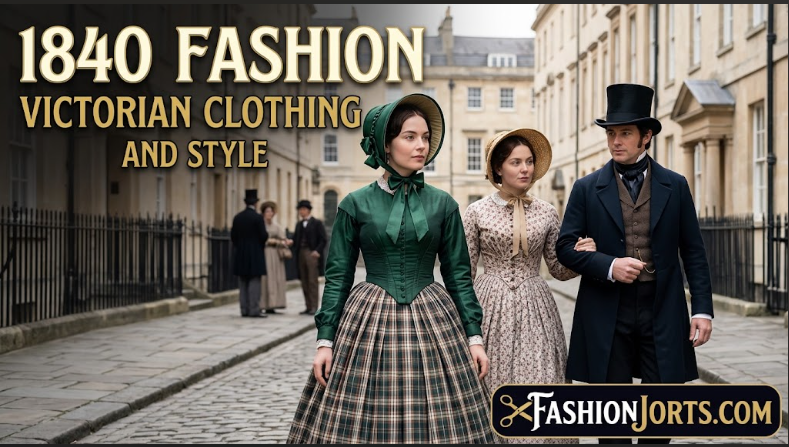
Women’s clothing emphasized a fitted upper body and a broad skirt. Bodices often extended into a pointed shape at the front, creating a defined waistline. Dresses were usually ankle-length or floor-length, depending on the wearer and the occasion.
Dresses, Sleeves, and Skirts
Dresses were made with carefully fitted bodices, gathered skirts, and long sleeves. Narrow sleeves became increasingly popular during the early 1840s, replacing the oversized sleeve shapes associated with the previous decade. Layers of petticoats helped support the skirt and create fullness without the large metal cage structures introduced later.
Fabrics, Colors, and Accessories
Silk was popular for formal dresses, while cotton, wool, and linen served practical everyday needs. Solid colors, floral prints, stripes, and checks offered different choices depending on taste and budget. Bonnets, shawls, gloves, and small jewelry pieces completed many women’s outfits, while center-parted hairstyles arranged into buns created a familiar period appearance.
Men’s Fashion in 1840
Men’s clothing favored clean lines, fitted coats, and a formal appearance. The frock coat was a common choice for daytime wear, particularly among men who wanted to appear respectable in professional or social settings. Dark wool fabrics were widely used, although waistcoats and accessories could introduce brighter colors and patterns.
Trousers, Waistcoats, and Neckwear
Full-length trousers were worn with shirts, waistcoats, and tailored coats. White shirts often featured high collars, while cravats added a formal finishing touch around the neck. Top hats were popular in urban settings, although other styles of headwear suited outdoor work and country activities.
Children’s Clothing in 1840
Children’s clothing borrowed many features from adult fashion but allowed more freedom for movement. Babies often wore simple dresses, while young girls wore shorter frocks that gradually became longer as they grew. Boys commonly wore jackets and trousers as they approached adolescence, although clothing choices differed between families and social groups.
How Social Class Shaped 1840 Fashion
A person’s clothing often reflected what they could afford and the work they performed. Wealthier families could purchase fine fabrics, employ dressmakers, and maintain different outfits for various occasions. Working-class families generally depended on practical garments that could be repaired, reused, and passed between family members. Fashion publications helped spread new ideas, but illustrations did not represent what everyone wore daily. Making clothes required time and skill, and most garments were still sewn by hand. As a result, fashionable designs often appeared in simpler forms among people with limited resources.
Queen Victoria’s Wedding Dress and Its Influence
Queen Victoria married Prince Albert on February 10, 1840, wearing a white wedding dress made with silk and Honiton lace. Her choice helped strengthen the association between white clothing and bridal celebrations among Western audiences. White wedding dresses existed before her marriage, so her influence is best understood as helping popularize the style rather than inventing it. The dress also demonstrated how royal fashion could affect public taste. Its lace details and carefully made fabric reflected the value placed on craftsmanship during the period.
How Clothing Was Made in the 1840s
Hand sewing remained central to clothing production during the decade. Dressmakers needed to measure and fit bodices carefully, while full skirts required substantial fabric and precise gathering. Some households made their own clothing, while wealthier customers could commission garments from professional makers. The development of sewing machines began changing garment production, but the technology was not yet a routine feature of most homes. Clothing therefore represented a considerable investment of labor, especially when it included fine materials or elaborate construction.
Conclusion
The clothing of 1840 offers a glimpse into the social expectations and practical realities of early Victorian life. Fitted dresses, tailored coats, traditional accessories, and carefully chosen fabrics helped define the decade’s appearance. Yet everyday clothing was shaped just as much by work, affordability, and comfort as by fashionable ideals. For anyone interested in historical clothing, the most revealing details are often found in the garments themselves. Bodice construction, sleeve shapes, skirt supports, and fabric choices help distinguish authentic 1840s styles from costumes that mix several historical periods.