Fashion has spent years revisiting past decades, from the return of ’90s minimalism to the colorful revival of early-2000s dressing. Y3K fashion takes another route. Rather than looking backward, it imagines how clothing could evolve in a distant, technology-driven future. The name refers to the “Year 3000,” but the style isn’t an attempt to predict exactly what people will wear centuries from now. It uses ideas we already associate with the future, including metallic surfaces, unusual silhouettes, digital culture, technical fabrics, and science-fiction imagery. The appeal lies in experimentation, which means there isn’t one strict way to get the look right.
What Is Y3K Fashion?
Y3K fashion is a futuristic aesthetic built around an imagined version of life in the year 3000. It combines clothing with visual references to advanced technology, virtual worlds, space travel, robotics, and cyber culture. Some outfits look sleek and polished, while others take a darker, more industrial direction. Unlike fashion inspired by a historical decade, there is no authentic Y3K wardrobe to copy. Designers and wearers can invent their own interpretation of what future clothing might become. That freedom explains why the aesthetic includes everything from fitted metallic tops to oversized technical trousers and sculptural accessories.
Where Did the Y3K Aesthetic Come From?
The name naturally follows Y2K, but futuristic clothing existed long before either term became popular online. Fashion designers have spent decades experimenting with space-age shapes, reflective materials, geometric construction, and clothing that challenges familiar ideas about the body. Science-fiction films and cyberpunk stories have explored many of the same visual themes. Today’s interpretation adds a stronger digital influence. Artificial intelligence, gaming characters, virtual avatars, social media filters, and increasingly sophisticated wearable devices have changed how people picture technology. Instead of imagining the future only through spaceships and robots, fashion can now borrow from digital experiences people already encounter every day.
What Does Y3K Fashion Look Like?
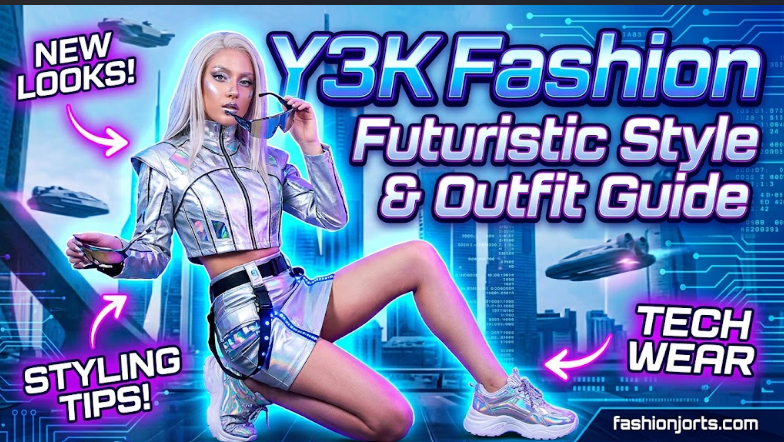
The easiest way to recognize the style is through its combination of unfamiliar shapes and technology-inspired details. Clothing may appear glossy, reflective, sharply structured, oversized, or extremely fitted. Asymmetric cuts and unexpected layering can make even familiar pieces feel less conventional. The look can also move between two extremes. One version is clean and almost clinical, using smooth surfaces, simple lines, and restrained colors. Another is darker and closer to cyberpunk, with technical layers, hardware, dramatic proportions, and accessories that appear designed for an imagined urban future. That flexibility is useful because it prevents the aesthetic from becoming a uniform. Someone wearing a silver fitted top and simple black trousers can interpret it very differently from someone choosing a full technical outfit. Both can work when the styling has a clear futuristic direction.
Y3K Fashion vs. Y2K: What’s the Difference?
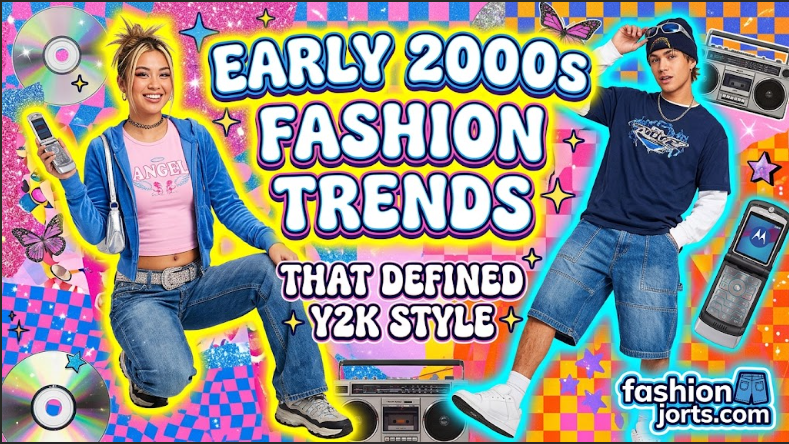
Y2K and Y3K sound related, yet they approach fashion from opposite directions. Y2K looks back at styles associated with the late 1990s and early 2000s. Low-rise jeans, baby tees, small shoulder bags, playful graphics, shiny fabrics, and nostalgic accessories commonly appear in modern interpretations. Y3K doesn’t have a real historical period behind it. Instead, it looks ahead and asks what clothing might become after centuries of technological change. That opens the door to stranger proportions, synthetic-looking surfaces, cyber references, and pieces that resemble something worn by a game character or science-fiction protagonist. There can still be visual overlap between the two. Metallic clothing and narrow sunglasses, for example, may appear in either style. The easiest distinction is the intention: one revisits a remembered past, while the other invents an unknown future.
The Colors and Materials That Define the Look
Silver is strongly associated with futuristic styling because it immediately suggests metal, machinery, and spacecraft. Chrome, grey, black, white, icy blue, and darker neutral shades can create a similar atmosphere. Bright synthetic accents can also work when used carefully against a more restrained outfit.Material often matters more than color. Glossy surfaces, mesh, translucent layers, reflective fabrics, smooth synthetics, and leather-like finishes can make basic clothing feel more experimental. Mixing contrasting textures also adds depth without requiring an outfit to become excessively complicated. A futuristic wardrobe doesn’t have to be completely metallic. A black outfit with an unusual construction can communicate the idea just as effectively. Shape, texture, and proportion usually create a stronger result than simply covering everything in silver.
Essential Clothing for a Y3K Outfit
A fitted top is an accessible starting point, particularly when it has an asymmetric neckline, cutouts, mesh panels, or a reflective finish. Pairing it with wide-leg or cargo trousers creates the contrast between close and oversized proportions that works naturally with this aesthetic. Structured jackets can provide another layer without making an outfit difficult to wear. Skirts and dresses offer more room for unusual construction. Uneven hems, body-conscious shapes, translucent layers, and geometric details can create a futuristic appearance without relying on obvious science-fiction references. The goal should be to choose pieces that feel slightly unexpected rather than simply unusual for attention. Outerwear can make the strongest statement. A glossy jacket, long technical coat, or sharply structured layer can transform simple clothes underneath it. This makes outerwear particularly useful for anyone who wants to experiment without replacing an entire wardrobe.
Shoes and Accessories That Complete the Style
Accessories are often the easiest way to introduce futuristic details. Shield sunglasses, narrow frames, metallic bags, sculptural jewelry, and polished hardware can change the character of an otherwise simple outfit. Their smaller scale also makes experimentation easier. Footwear can follow the same approach. Chunky sneakers, streamlined boots, platform shoes, or designs with technical construction complement the aesthetic without demanding a theatrical outfit. Shoes with exaggerated soles or unusual shapes can become the main visual feature when the clothing remains understated. Technology itself can also become part of the styling. Headphones, smartwatches, digital devices, and wearable accessories already sit between practical objects and personal style. Incorporating them intentionally makes sense for an aesthetic concerned with the relationship between humans and technology.
How K-Pop Helped Popularize the Y3K Aesthetic
K-pop has provided an ideal setting for futuristic styling because music videos allow fashion to exist alongside digital effects, elaborate sets, choreography, and fictional concepts. Artists can wear outfits that would appear extreme on an ordinary street while making perfect sense inside a carefully designed visual world. Those images then travel quickly through social platforms and fan communities. Groups and performers associated with cyber-inspired concepts have helped younger audiences recognize the aesthetic. Metallic garments, experimental eyewear, unusual hairstyles, technical clothing, and digitally influenced makeup have all appeared within contemporary pop styling. Fans can then reinterpret those dramatic looks in simpler ways. The influence works because it makes experimental fashion visible outside traditional runways. A complicated stage outfit may eventually inspire something as simple as pairing oversized trousers with a fitted top and futuristic glasses. That translation from performance styling to everyday clothing helps keep the aesthetic accessible.
How to Wear Y3K Fashion Without Looking Like a Costume
The simplest rule is to avoid introducing every futuristic element at once. Start with clothing that already feels comfortable, then add one unusual texture, silhouette, or accessory. Black trousers with a metallic top and simple shoes can communicate the idea without becoming overwhelming. Another option is to keep the colors neutral and experiment with proportion instead. An asymmetric top, oversized jacket, or unusually shaped bag can provide enough visual interest. This approach is especially useful for everyday outfits because the individual pieces remain easy to combine with other clothing. Personal style should remain visible underneath the trend. Someone who prefers minimal clothing doesn’t need neon colors or dramatic platforms, while a more expressive dresser can push the concept further. The strongest outfit feels intentional rather than assembled from a checklist.
Is Y3K Still a Fashion Trend in 2026?
The term may rise and fall in popularity, but the ideas behind it are broader than a single trend cycle. Fashion continues to respond to artificial intelligence, digital identity, gaming culture, wearable devices, and changing expectations about technology. Those influences aren’t likely to disappear simply because another aesthetic receives more attention online. There is also a difference between futuristic-looking clothing and clothing that actually incorporates new technology. As materials and wearable electronics develop, designers have more opportunities to make garments interactive, responsive, or digitally connected. That could eventually make some of today’s imaginary styling feel surprisingly ordinary. Y3K is therefore best understood as an evolving idea rather than a fixed trend. Its appearance can change as society’s idea of the future changes. What looks futuristic now may eventually become familiar, creating space for another generation to imagine something stranger.
Conclusion
Y3K fashion isn’t really about predicting the wardrobe of the year 3000. It gives people a framework for exploring how technology, digital identity, and imagination can influence clothing today. That leaves considerably more creative freedom than a trend tied to one historical period. The style works best when its futuristic elements have a purpose. Interesting proportions, technical textures, metallic details, or unconventional accessories can communicate the idea without making an outfit feel like science-fiction costume design. Personal taste still matters more than following every recognizable feature. Its future will probably change alongside technology itself. As today’s futuristic ideas become ordinary, designers will have to imagine something new again. That constant reinvention may be the most fitting quality of Y3K style.