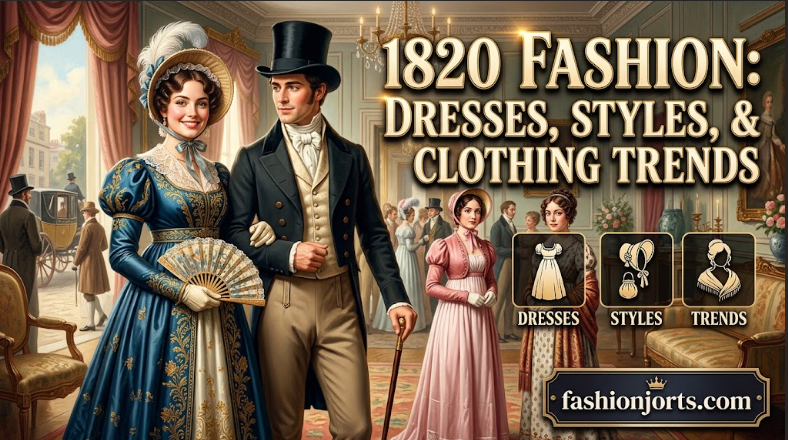
Fashion in the 1820s looked noticeably different from the simple, flowing clothing popular at the beginning of the nineteenth century. Women’s dresses developed fuller skirts, defined waists, and increasingly dramatic sleeves, while men’s outfits relied on precise tailoring and carefully chosen accessories. These changes reflected shifting tastes, social expectations, and the influence of Romanticism across Europe and North America. The decade is especially interesting because clothing did not change overnight. Early styles retained elements of Regency fashion, but by the late 1820s, silhouettes had become more structured and decorative. Understanding these differences helps explain why historical outfits from 1820 and 1829 can look surprisingly different, despite belonging to the same decade.
What Was Fashion Like in the 1820s?
The 1820s marked a gradual shift from the high-waisted dresses associated with the Regency period toward the more defined silhouettes of the Romantic era. Clothing became increasingly shaped around the natural waist, and skirts gained volume through gathering, pleating, and additional fabric. Decorative details also became more noticeable, giving garments a richer appearance than many earlier Neoclassical designs. Fashion varied according to location, income, age, and occasion. Wealthy families could afford fine silk, elaborate embroidery, and professionally tailored garments, while working people generally chose practical clothing that could withstand regular use. As a result, fashionable portraits and surviving formal dresses show only part of what people wore during the decade.
Women’s Fashion in the 1820s
Women’s clothing experienced some of the most visible changes of this period. Dresses retained the elegance of earlier Regency styles but gradually developed fuller shapes, fitted bodices, and more elaborate sleeves.
Dresses and Changing Waistlines
At the beginning of the decade, many dresses still featured a raised waistline just below the bust. This design allowed the skirt to fall relatively freely, creating the long, graceful shape associated with early nineteenth-century fashion. As the 1820s progressed, waistlines moved lower, bringing greater emphasis to the torso and creating a more defined figure. By the late 1820s, bodices were often fitted more closely to the body, while skirts expanded around the hips. The resulting silhouette looked more structured and balanced than the earlier Empire style. For anyone recreating a historical outfit, the position of the waist is one of the clearest ways to distinguish early-decade clothing from later designs.
Puffed Sleeves and Fuller Skirts
Large sleeves became a defining feature of fashionable women’s clothing during the later part of the decade. Some designs featured substantial volume around the upper arm, with the fabric narrowing toward the wrist. These shapes, commonly associated with gigot or leg-of-mutton sleeves, gave dresses a dramatic outline. Skirts also became wider and more decorative. Pleats, gathered fabric, ribbons, and contrasting trims added movement and visual interest without requiring every dress to use expensive materials. The combination of a fitted waist, broad sleeves, and a fuller skirt helped establish the recognizable Romantic-era silhouette.
Corsets and Undergarments
The shape of a fashionable dress depended partly on what was worn underneath it. Women commonly used chemises, stays or corsets, and petticoats to create a smooth foundation and support the desired outline. Additional padding or supports could be used to enhance particular shapes, although the exact arrangements varied. These garments should not be treated as identical across the entire decade. Earlier dresses and later gowns required different shaping, and individual women made choices based on their circumstances. Working women also needed clothing that allowed them to carry out daily tasks, so fashionable ideals did not always determine practical dress.
Fabrics, Colors, and Decoration
Silk, cotton, linen, wool, and lightweight decorative fabrics all appeared in clothing during the 1820s. Silk was particularly suitable for formal gowns, while cotton and linen offered practical choices for everyday wear. Printed cottons, patterned textiles, ribbons, embroidery, and lace provided ways to add detail according to personal taste and budget. Color choices varied widely rather than following one universal trend. Formal outfits could feature rich shades and decorative surfaces, while lighter fabrics remained suitable for particular occasions and seasons. The growing interest in historical styles and Romantic artistic expression also encouraged clothing with more visual detail.
Men’s Fashion in the 1820s
Men’s clothing focused on fit, proportion, and a polished appearance. Instead of relying heavily on decoration, fashionable outfits used carefully shaped coats, layered garments, and accessories to create a distinctive silhouette.
Tailcoats and Fitted Jackets
The tailcoat was an important part of formal men’s clothing. Its fitted torso and shaped waist produced a sharp outline, while the longer tails extended behind the body. Wool was a common choice for coats, and darker colors often suited formal or public settings. Different coats served different purposes. Riding garments, everyday jackets, and formal outerwear varied in cut and construction, reflecting the activities and social expectations of the wearer. A well-fitted coat could make an outfit look refined even when its decoration was restrained.
Waistcoats, Shirts, and Cravats
A typical fashionable outfit combined a shirt, waistcoat, coat, and neckcloth. Waistcoats offered an opportunity to introduce lighter colors, patterned fabrics, or subtle ornamentation beneath a darker outer layer. Shirts were generally designed to sit neatly beneath the collar and other garments. Cravats were especially important because they framed the face and completed the upper part of the outfit. Their folds and knots required attention, making them an essential part of a well-presented appearance. Men also used accessories such as gloves and pocket watches to complement formal clothing.
Trousers, Breeches, and Footwear
Long trousers and fitted pantaloons were increasingly common during the early nineteenth century. Breeches had not disappeared, however, and could still be worn for certain formal occasions or traditional settings. The choice depended on the event, local custom, and personal circumstances. Leather shoes and boots completed many outfits. Hats, walking canes, and gloves added practical value while also reflecting contemporary expectations of respectable dress. As with women’s fashion, the exact combination depended on the wearer’s occupation and social position.
Popular Accessories in the 1820s
Accessories helped distinguish an ordinary outfit from one intended for a social gathering or formal event. Women commonly wore bonnets outdoors, shawls for additional warmth, and gloves for occasions that called for a more polished appearance. Small drawstring bags known as reticules offered a convenient way to carry personal belongings with dresses that lacked modern-style pockets. Jewelry, ribbons, and decorative belts could complement a gown without changing its basic shape. Men’s accessories included top hats, cravats, pocket watches, leather gloves, and walking canes. These items were not universal requirements, but they provide useful details when assembling a historically inspired outfit. Outerwear also mattered, particularly in colder weather. Women’s pelisses were fitted garments worn over dresses, combining coverage with fashionable tailoring. Their designs could include shaped waists, decorative edges, and details that matched the changing silhouettes of the decade.
How Fashion Changed Between 1820 and 1829
Early 1820s: The Lasting Influence of Regency Style
At the beginning of the decade, women’s dresses frequently retained high waistlines and flowing skirts. The overall appearance was relatively elongated, with less emphasis on the hips than in later Romantic-era designs. Men’s clothing already favored tailored coats and layered outfits, although individual styles continued to develop.
Mid-1820s: A More Defined Silhouette
During the middle years, women’s waistlines gradually descended and bodices became more fitted. Skirts gained fullness, and sleeves developed more noticeable volume. Decorative elements such as pleats, ribbons, and contrasting fabric helped distinguish newer styles from the simpler shapes that had come before.
Late 1820s: Fuller Shapes and Dramatic Sleeves
By the end of the decade, fashionable women’s dresses often emphasized a narrow waist, wide skirt, and substantial sleeves. These proportions created a stronger visual contrast than the flowing styles of the early 1800s. The shift was gradual, however, and older garments remained in use even as fashionable designs changed.
What Influenced 1820s Fashion?
Romanticism helped shape the period’s interest in expressive clothing, historical references, and decorative detail. Art, literature, portraits, and fashion illustrations offered ideas that designers and dressmakers could adapt. The growing preference for fuller silhouettes reflected a broader change in taste rather than a single invention or event. Social circumstances also affected what people wore. Wealth, occupation, access to materials, and the availability of skilled tailoring all influenced clothing choices. While fashionable dresses and formal coats can reveal contemporary ideals, they should not be mistaken for a complete picture of everyday life.
How to Recreate an Authentic 1820s Outfit
The most effective way to recreate this period is to choose a specific year and occasion before selecting individual garments. For an early-1820s women’s look, a raised waistline and flowing skirt may be appropriate, while a late-decade outfit should have a more defined waist, fuller sleeves, and a wider skirt. A bonnet, shawl, or reticule can complete the appearance without overwhelming the clothing. For men’s clothing, begin with a tailored coat, waistcoat, shirt, and cravat. Choose trousers or breeches that suit the intended occasion, then add historically appropriate footwear and a hat if needed. Pay attention to the cut of each garment rather than relying only on modern clothing with antique-looking colors. Museum collections and dated fashion plates are useful references because they show actual garments and contemporary illustrations. Comparing several examples from the same period can help avoid mixing details from different decades. This matters particularly for costumes, historical photography, theater, and period-inspired events.
Conclusion
The fashion of the 1820s is best understood as a period of gradual change rather than a single, fixed style. Women’s clothing developed fuller shapes and more dramatic sleeves, while men’s outfits continued to emphasize tailored construction and carefully arranged layers. These differences help explain the decade’s distinctive place between Regency simplicity and the stronger silhouettes that followed. For anyone interested in historical clothing, the details matter as much as the overall appearance. A dress from 1821 may look quite different from one made in 1828, even when both reflect the tastes of the same era. Starting with dated historical references is the best way to recreate the period accurately and understand how fashion evolved.