The first decade of the 20th century had a distinctive look that is easy to recognise today. Women wore long skirts, fitted bodices, corsets, gloves, and large decorated hats, while men generally appeared in tailored suits, waistcoats, shirts, ties, and formal hats. Clothing was still strongly connected to social rules, but the decade also brought signs of change. The period is often called the Edwardian era, particularly in Britain, although similar styles were worn across Europe and North America. What makes the decade interesting is the gradual shift from highly structured Victorian clothing toward the simpler and more practical styles that would become popular in the following years.
What Was Fashion Like in the 1900s?
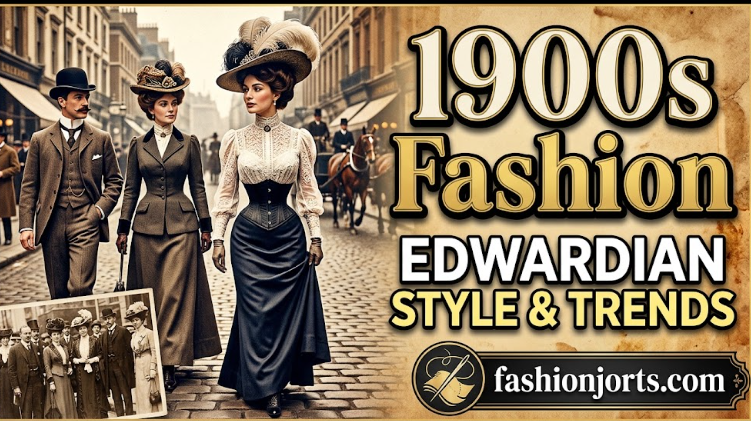
Clothing at the beginning of the decade was formal and carefully constructed. People generally dressed according to the occasion, and even ordinary activities could call for clothing that would seem elaborate today. For women, the fashionable figure was shaped by the corset and layers of clothing underneath the dress. The upper body appeared rounded and forward, while the skirt created a smooth, flowing line from the hips towards the floor. Details such as lace, embroidery, ribbons, pleats, and carefully placed fabric helped make an outfit look finished. Men’s clothing was more restrained. A well-dressed man was usually expected to wear a suit or another appropriate formal outfit, with his shirt, collar, tie, shoes, and hat all forming part of the overall appearance.
Women’s Dresses and Skirts
Women’s dresses in the early 1900s were usually long and covered much of the body. Day dresses commonly had high necklines and long sleeves, while evening gowns offered more freedom around the neckline and arms. The shape of the dress mattered as much as its decoration. Early in the decade, skirts were relatively full, while bodices were shaped closely around the upper body. Some outfits included a long train or additional layers that made them suitable for formal occasions. Not every woman wore an expensive designer gown. Clothing depended heavily on income, location, occupation, and occasion. Working women and middle-class families often relied on simpler garments, homemade clothing, or pieces that could be altered and reused.
The S-Shaped Silhouette
One of the strongest visual features of early 1900s clothing was the S-shaped silhouette. It was created through a combination of corsetry, bodice construction, posture, and undergarments rather than by the dress alone. The fashionable shape pushed the chest forward while the hips appeared further back. This produced the distinctive curved profile associated with Edwardian women. The silhouette also explains why photographs from the period can look so different from later images of the same century. Clothing was designed to control the body’s outline, not simply to cover it.
Blouses and Shirtwaists
The blouse became an important part of everyday women’s clothing. A shirtwaist could be worn with a separate skirt and offered more flexibility than a complete dress. Some were simple, while others featured lace, high collars, decorative sleeves, embroidery, or detailed fronts. This combination of blouse and skirt was particularly useful for women who needed clothing that could work for everyday activities as well as more respectable public settings. It also shows that early 20th-century clothing was not entirely about formal gowns. Separate garments gave women more options and helped create a wardrobe that could be changed without replacing an entire outfit.
Hats, Hair, and Accessories
A woman stepping outside without a hat would have looked unusual in many social settings. Hats were an important part of dressing and could be as carefully decorated as the clothing underneath. Large brims, feathers, flowers, ribbons, and other ornaments were common. As the decade progressed, some hats became remarkably large, creating a dramatic outline around the head. Hair was styled to support this appearance. Women often wore their hair high and full, sometimes using additional hair to create greater volume. Gloves, parasols, handbags, belts, and jewellery could complete the outfit. These accessories were not minor additions. They helped communicate the occasion and social setting in which the clothing was being worn.
Men’s Fashion in the 1900s
Men’s clothing was generally more conservative than women’s, but there were still clear differences between formal and everyday dress. The suit was central to a man’s wardrobe. A typical outfit could include trousers, a jacket, waistcoat, shirt, tie, polished shoes, and a hat. Different styles were selected depending on whether a man was working, travelling, attending a social event, or dressing for the evening. The three-piece suit was especially familiar during this period. Waistcoats added another layer and gave men an opportunity to introduce a slightly different colour or pattern while maintaining a formal appearance. Evening clothing followed its own rules. Tailcoats remained associated with the most formal occasions, while dinner jackets offered a less formal alternative for certain events.
Children’s Clothing
Children’s clothes often reflected the same social expectations as adult clothing. Girls commonly wore dresses with stockings, while boys could wear suits, jackets, shorts, or sailor-inspired outfits. The sailor suit was especially recognisable. It was worn by boys in many families and became one of the familiar children’s styles of the period. Children’s clothing was not always practical by modern standards. Parents often expected children to look neat and properly dressed when outside the home, although everyday garments could be simpler than those worn for special occasions.
How Fashion Changed During the Decade
The decade did not have one single style from beginning to end. The differences between 1900 and 1909 are important. At the start of the decade, the S-shaped figure and heavily structured clothing were dominant. As the years passed, the overall silhouette began to become longer and less exaggerated. Skirts changed shape, waistlines shifted, and clothing gradually appeared less rigid. By the final years, designers and fashionable dressers were already moving toward a different look. The changes were gradual, but they prepared the way for the more streamlined styles of the 1910s.
Fashion and Everyday Life
Clothing in the 1900s also reflected the activities people performed. A woman might have separate clothes for housework, shopping, travelling, visiting friends, afternoon events, and formal evenings. This explains why surviving wardrobes from the period can contain so many different garments. Clothing was not simply divided into “casual” and “formal” as it often is today. Social expectations also influenced what was considered appropriate. A garment could be perfectly acceptable at home but unsuitable for a formal visit. Dress codes were part of everyday life, particularly among wealthier and middle-class communities.
Why 1900s Fashion Still Stands Out
The appeal of this period comes from its strong visual identity. Large hats, high collars, long skirts, tailored suits, elaborate evening dresses, and carefully arranged hairstyles immediately suggest the beginning of the 20th century. Yet the decade was not simply about old-fashioned clothing. It was a period of transition. Traditional ideas about appearance remained powerful, while new approaches to women’s clothing, movement, and everyday life were beginning to appear. That combination gives the period its character. The 1900s look backward to the 19th century, but they also point directly toward the modern fashion that followed.
Conclusion
The fashion of the 1900s was formal, detailed, and strongly shaped by social expectations. Women wore structured dresses and elaborate accessories, while men relied on tailored clothing that valued neatness and presentation. But the decade was also a period of change. Clothing slowly became less rigid, separate garments became useful for everyday life, and new silhouettes began to replace the exaggerated shape of the early years. That transition is what makes the 1900s such an interesting period to study. It was the point where the clothing traditions of the previous century began giving way to the modern fashion era.