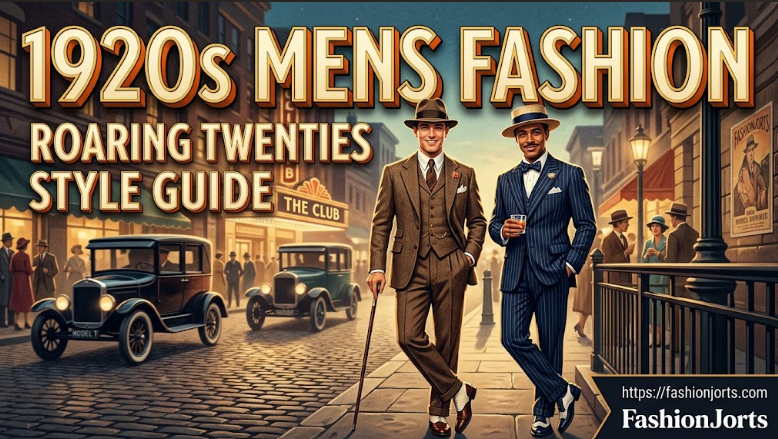
The 1920s was a decade that changed the way men dressed. After years of wartime restrictions and traditional social rules, men began embracing clothing that felt more comfortable, expressive, and suited to a modern lifestyle. The era introduced a new approach to tailoring, with relaxed suits, wider trousers, stylish accessories, and a stronger connection between fashion and personality. Known as the Roaring Twenties, this period was shaped by jazz clubs, changing social habits, cinema, and a growing interest in leisure. Men’s clothing still valued elegance and craftsmanship, but it also became less rigid than previous generations. The result was a style that combined sophistication with a sense of freedom.
How 1920s Mens Fashion Evolved
At the beginning of the decade, many men continued wearing formal styles influenced by the early 1900s. Suits were structured, collars were stiff, and clothing was designed to present a serious and respectable image. However, younger men started moving toward styles that reflected a faster, more energetic way of life. The growth of cities, entertainment venues, and social gatherings created demand for clothing that worked in different settings. A man might wear a tailored suit for business, attend a jazz performance in eveningwear, and choose more relaxed clothing for sports or weekend activities. By the late 1920s, menswear had developed a softer and more comfortable appearance. Tailoring remained important, but movement and personal style became equally valued.
The Three-Piece Suit Defined the Decade
The three-piece suit became one of the most recognizable symbols of 1920s menswear. It usually included a jacket, matching trousers, and a waistcoat worn over a formal shirt and tie. This outfit represented confidence and attention to detail, making it suitable for work, social events, and formal occasions. Suit jackets often featured wider lapels, natural shoulders, and a comfortable fit. Unlike earlier styles that emphasized a narrow and restrictive shape, 1920s tailoring allowed more freedom of movement. Fabric choices also helped define the era. Wool remained a popular material because it was practical and durable, while patterns such as stripes, checks, and textured weaves added character to traditional suits.
Wide Trousers and Relaxed Silhouettes
One of the biggest changes in 1920s mens fashion was the popularity of wider trousers. Men moved away from the narrow cuts of previous decades and embraced trousers with higher waists and fuller legs. Oxford bags became one of the most talked-about trouser styles of the period. Originally connected with university students, these extremely wide trousers gained attention because of their unusual shape and youthful appeal. Not every man wore exaggerated wide-leg trousers, but the trend showed a larger movement toward comfort. Clothing was beginning to adapt to active lifestyles instead of simply following strict formal traditions.
Hats Completed the Gentleman’s Look
A hat was considered an essential part of a man’s outfit during the 1920s. Leaving home without one was often seen as incomplete dressing, especially for formal occasions. The fedora became a popular choice because it worked well with both business suits and evening clothing. Other common styles included flat caps, bowler hats, homburg hats, and straw boaters during warmer months. Hats also reflected different lifestyles. Professionals often chose more formal designs, while working men and sports enthusiasts preferred practical options that matched their daily activities.
Shirts, Ties, and Accessories Added Personality
Although suits were often made in classic colours, accessories gave men the opportunity to show individuality. A carefully selected tie, pocket square, or pair of cufflinks could completely change the appearance of an outfit. Silk ties with stripes, geometric designs, and bold patterns became fashionable during the decade. These details reflected the artistic influence of the Jazz Age and the growing interest in modern design. Other popular accessories included pocket watches, suspenders, tie clips, leather gloves, and polished shoes. These small elements helped create the carefully finished appearance associated with the stylish gentleman of the era.
Evening Wear Became More Modern
Formal events in the 1920s encouraged men to dress with elegance while allowing more comfort than older formal traditions. The tuxedo became increasingly popular as an alternative to highly formal evening clothing. A typical evening outfit included a dark dinner jacket, white shirt, bow tie, formal trousers, and leather dress shoes. This style became strongly associated with restaurants, clubs, celebrations, and entertainment venues. The popularity of eveningwear showed how fashion was becoming connected with social experiences. Clothing was no longer only about appearance; it was also part of enjoying a changing cultural scene.
Sportswear Changed Everyday Clothing
The 1920s introduced a greater acceptance of casual clothing for men. Sports and outdoor activities influenced everyday style, bringing items such as knitted sweaters, cardigans, tweed jackets, and casual trousers into mainstream fashion. Golf clothing had a particularly strong influence, with plus-fours and patterned sweaters becoming recognizable leisurewear pieces. These styles allowed men to dress comfortably without losing a sense of refinement. This shift helped create the idea of having different clothing styles for different parts of life, including work, formal events, and relaxation.
The Influence of Jazz, Cinema, and Popular Culture
Fashion during the 1920s was closely connected to entertainment and cultural change. Jazz music, nightlife, and cinema introduced new ideas about confidence and self-expression. Hollywood also helped spread fashionable images of well-dressed men. Actors appeared on screen wearing sharp suits, stylish hairstyles, and elegant evening clothing, influencing audiences around the world. The decade’s fashion reflected a society that was becoming more modern. Men wanted clothing that showed success, confidence, and personality rather than simply following old traditions.
How to Create a 1920s-Inspired Look Today
A modern interpretation of 1920s mens fashion does not require wearing a complete vintage outfit. The best approach is to focus on key details that capture the spirit of the era. A well-tailored suit, high-waisted trousers, a classic tie, leather shoes, or a traditional hat can create a strong connection to the decade. The goal is to combine vintage influences with modern comfort. Good tailoring remains the most important element. The 1920s style was memorable because clothing was carefully fitted and thoughtfully put together.
Conclusion
1920s mens fashion marked a turning point in the history of men’s clothing. It maintained the elegance of traditional tailoring while introducing more relaxed shapes, creative details, and styles suited to a changing society. The appeal of the era comes from its balance between sophistication and personal expression. Men dressed carefully, but they also used fashion to reflect their interests, lifestyle, and confidence. Today, the influence of the Roaring Twenties continues because the decade created timeless ideas about quality, style, and the importance of dressing with purpose.